How to Make Cleavers Tea (and How It’s Traditionally Used)
A handful of a common hedgerow plant, some water and a little patience. Here’s how to make cleavers tea hot or cold, with fresh or dried herb, and how it has traditionally been used.
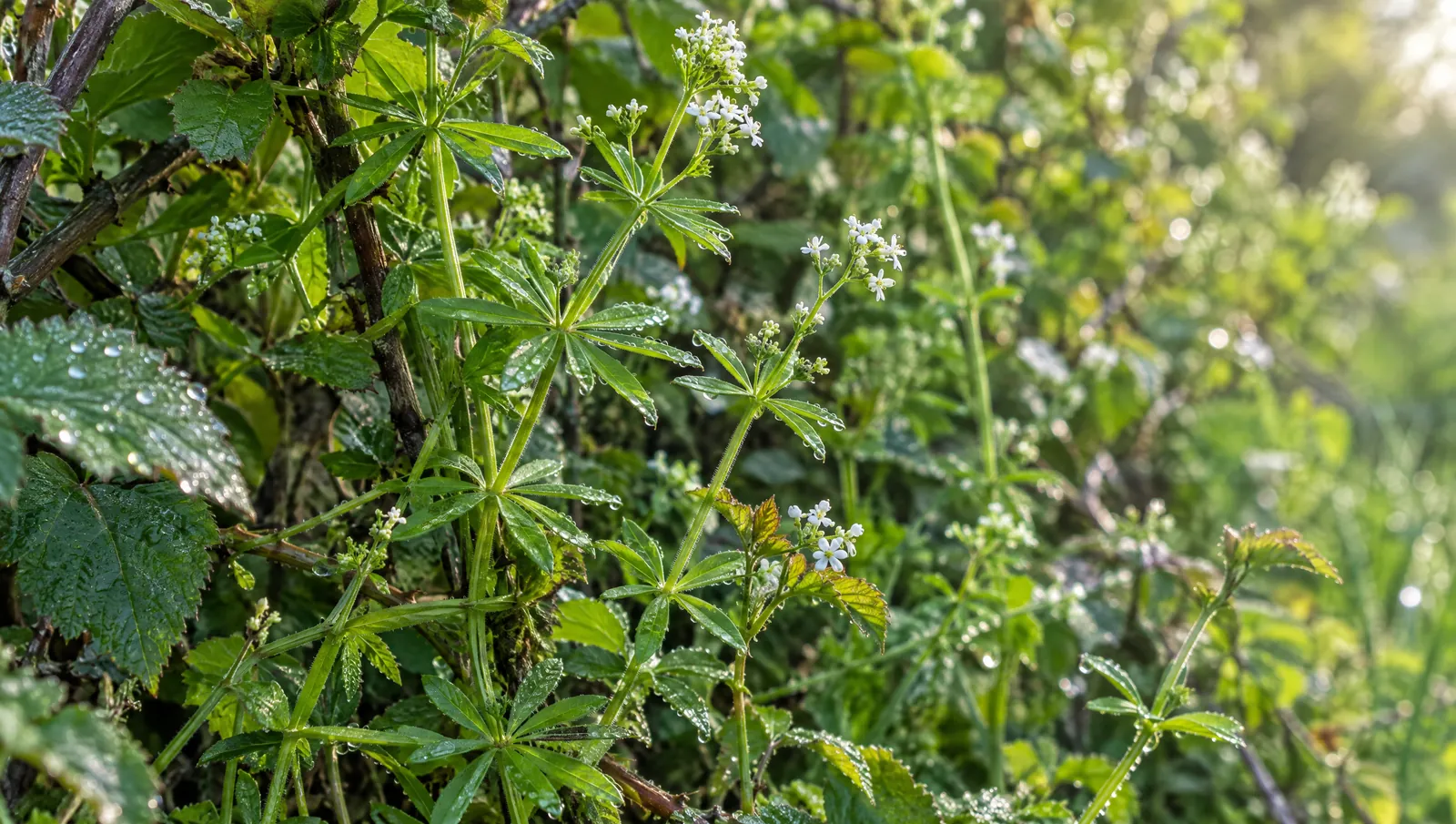
Every spring, cleavers scrambles through hedges and garden beds, and people have long gathered its tender tops for the teapot. It’s the hedgerow herb that gave Cleavera its name, and a jar of cleavers tea is a gentle way to get to know it.
To learn to recognize the plant first, see our guide to how to identify cleavers.
What is cleavers tea?
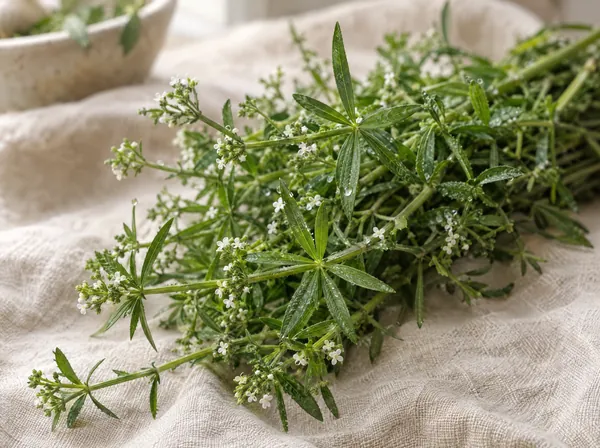
Cleavers tea is a water infusion of the leafy stems, leaves and flowers of Galium aparine, also called goosegrass or clivers. Herbalists call these above-ground parts the aerial parts.
Cleavers belongs to Rubiaceae, the coffee family. Penn State Extension notes that its young leaves were eaten raw and cooked and its fruits roasted as a coffee substitute, but as a drink it was mostly taken fresh in spring. In Western herbal tradition, it’s one of the classic herbs traditionally used to support healthy lymphatic flow.* We couldn’t find any clinical trials of cleavers tea, so enjoy it as a traditional seasonal drink, not a remedy.
Should you use fresh or dried cleavers?
Use fresh cleavers in spring for the brightest flavor and dried cleavers the rest of the year. Dried herb is stronger, so use less: the National Center for Home Food Preservation (NCHFP) suggests ¼ to ⅓ of the fresh amount, which is why the recipe calls for a cup of fresh tops or about ¼ cup dried.
Buying dried? Look for the Latin name Galium aparine and the plant part on the label. Our label-reading guide to lymphatic drops explains why both matter for any herbal product.
How to dry your own cleavers
Cleavers is soft and moist, so dry it fast. NCHFP suggests rinsing herbs in cool water, shaking off the excess and using a dehydrator at 95°F to 115°F (up to 125°F in humid areas) for 1 to 4 hours. It warns that moist, tender herbs can mold if they dry slowly, and it advises against sun drying, which fades flavor and color.
The herb is ready when the leaves crumble and the stems snap. Store it in an airtight jar in a cool, dry, dark cupboard and date the label. Heat, light and air wear down liquid extracts too, as our guide to storing herbal drops explains.
How do you gather cleavers safely?
Gather cleavers only if you can identify it with complete certainty, from clean ground you have permission to use, and pick young tops before the burs form. Otherwise, buy it dried.
Mississippi State University Extension’s guide to wild edible plants sets out rules worth following every time:
- Be 100 percent certain. Check at least three plant guides. When in doubt, leave it out.
- Choose clean ground, away from roadsides, power line corridors, industrial areas and anything sprayed with herbicides.
- Pick young growth. The guide lists only the young, tender leaves and stems of cleavers.
- Take a little. No more than a third of any plant population, and ask permission on private land.
Wear gloves if your skin is sensitive, since Penn State Extension notes the scratchy hairs can irritate some people, and snip just the top few inches of each stem, where growth is most tender. Our cleavers identification guide covers the stick test and look-alikes such as sweet woodruff.
How do you make cleavers tea, step by step?
Rinse, chop, steep and strain. A cold infusion needs about 10 minutes of work plus several hours in the fridge; a hot cup is ready in about 15 minutes.
You’ll need 2 cups (about 500 mL) of water, a clean glass jar or teapot, kitchen scissors and a fine strainer.
- Start with cleavers you’re sure of. Use fresh tops you’ve identified with complete certainty and picked from clean, unsprayed ground, or dried cleavers labeled Galium aparine.
- Rinse it well. Wash your hands, then gently rub fresh cleavers under plain running water. Skip soap or produce wash, and pat the herb dry with a clean towel.
- Chop and measure. Snip the stems into short pieces. Use about 1 lightly packed cup of fresh herb, or about 1/4 cup dried, for 2 cups of water.
- Steep it. For a cold infusion, put the herb in a clean jar, cover it with cool water, close the lid and refrigerate for 6 to 8 hours or overnight. For a hot tea, pour water that has rested a minute off the boil over the herb, cover, and steep for 10 to 15 minutes.
- Strain. Pour the tea through a fine strainer, pressing the herb gently with a spoon, and compost what’s left.
- Taste and adjust. If it tastes too grassy, dilute it with water, or add a slice of lemon, a sprig of mint or a little honey.
- Drink it fresh. Keep leftovers covered in the fridge and finish them by the next day. Pour away any tea that smells sour or turns cloudy or slimy.
Step 2 follows the FDA’s advice for any fresh produce: plain running water and gentle rubbing, then a clean cloth or paper towel to dry. No soap is needed.
Is cold infusion or hot tea better for cleavers?
Neither has been shown to be better, so it comes down to taste and tradition, and tradition leans cool. The 1898 King’s American Dispensatory, a standard Eclectic reference, put it plainly: “Cold or warm water extracts the virtues of the plants; boiling destroys them.”
Its recipe soaked about 1½ ounces of herb in a pint of warm water for two hours, served cold and sweetened with honey if you liked. Nobody has tested the boiling claim for cleavers, so count it as tradition rather than chemistry.
Method does matter, though. In a 2024 Molecules study of cold-water chamomile extracts, water temperature, steeping time and the amount of herb all changed which plant compounds ended up in the liquid. Two cups of cleavers tea made differently won’t be identical, and there’s no standard strength. See how that plays out in lymphatic drops vs. capsules vs. tea.
| Cold infusion | Hot tea | |
|---|---|---|
| Water | Cool water | Hot water, rested a minute off the boil |
| Time | 6 to 8 hours or overnight, in the fridge | 10 to 15 minutes, covered |
| Flavor | Soft, fresh and green | Fuller and more herbal |
| Tradition | Closest to the Eclectic advice to avoid boiling | An everyday herbal cup |
| Food safety | Steep it in the fridge, never on the counter or in the sun | Refrigerate leftovers within 2 hours |
| Best for | Warm days and make-ahead jars | Cool mornings and a cup right now |
Why the fridge? The CDC says bacteria can multiply rapidly between 40°F and 140°F and advises keeping your refrigerator at 40°F or below. A cold infusion never gets hot enough to kill the microbes fresh plants carry, so the cold keeps them in check. For the same reason, skip sun tea.
What does cleavers tea taste like?
Cleavers tea tastes mild, green and slightly grassy, closer to cucumber water than to a strong herbal tea. Cold infusions are the softest; tea from dried herb tastes more like hay.
A slice of lemon, a few mint leaves steeped alongside, or a little honey all suit it. The usual mistakes are too much herb, which tastes swampy, and a hot cup left to stew. If a batch turns out bitter, dilute it and use less next time.
If you take Cleavera, you can stir your 1 mL serving into a glass of cooled cleavers tea. Cleavera Lymphatic Drainage Drops pair cleavers with red clover, stillingia and prickly ash, four herbs traditionally used to support healthy lymphatic flow.*
How is cleavers tea traditionally used?
Traditionally, cleavers was a spring herb, gathered fresh as the first greens appeared and taken as a tea or juice to support healthy lymphatic flow.*
After winters of stored food, rural families in Europe and America welcomed spring tonics made from fresh greens, and early-sprouting cleavers was among the most familiar. The Eclectic physicians of the 1800s classed it as a cooling herb* and gave its infusion cold, a few times a day.
Traditional use shows how people valued a plant, not what it does, and lab studies of plant extracts can’t tell you what a cup does in your body. Read more in the herbal tradition behind cleavers, red clover, stillingia and prickly ash and our ingredient guide.
Unsweetened cleavers tea is also caffeine-free and counts toward your daily fluids; see how much water to drink.
Who should skip cleavers tea?
Skip cleavers tea, or check with your clinician first, if you’re pregnant or breastfeeding, want to give it to a child, take prescription medication, have a chronic health condition or have surgery coming up.
Cleavers is generally regarded as mild, but formal safety research on it is thin. The NIH’s National Center for Complementary and Integrative Health (NCCIH) notes that natural doesn’t always mean safe, that many supplements haven’t been tested in pregnant women, nursing mothers or children, and that some can interact with medicines. It also advises telling your providers well before any surgery. Those cautions apply to a homemade tea as much as to a capsule.
- Pregnant, trying to conceive or breastfeeding: skip it unless your clinician says otherwise.
- Children: ask a pediatrician first.
- Taking medication, including blood thinners or hormone therapy: ask your doctor or pharmacist.
- A chronic condition, such as heart, liver or kidney disease, or a serious illness under active medical care: ask first.
- Sensitive skin or plant allergies: wear gloves to gather it, and stop drinking it if you notice itching, a rash or hives.
Stop and get advice if you notice a rash, hives or stomach upset after drinking cleavers tea, and get emergency help right away for trouble breathing or swelling of the lips, tongue or throat. Never drink a plant you can’t identify with certainty.
Cleavera is for adults only. Talk to your healthcare professional before use if you’re pregnant or nursing, take medication (including blood thinners or hormone therapy), have a hormone-sensitive or bleeding condition, or have surgery scheduled. See lymphatic drops side effects and who should skip them.
Frequently asked questions
Can you drink cleavers tea every day?
Cleavers tea was traditionally a seasonal spring drink, and there’s no research on drinking it daily for long periods. If you enjoy it, a glass a day in season is a moderate approach. Take breaks, stop if it disagrees with you, and ask your clinician first if you have a health condition or take medication.
Can you eat cleavers raw?
Yes, when it’s young. Penn State Extension notes that the young leaves were eaten raw and cooked, and Mississippi State University Extension lists young, tender leaves and stems for salads and greens. The hooked hairs make raw cleavers bristly, so chop it finely, be certain of its identity and start with a small amount.
How long does cleavers tea keep in the fridge?
Drink it the day you make it, or by the next day at the latest. Keep it covered in a refrigerator set to 40°F or below, as the CDC recommends, and don’t leave it out for more than 2 hours. Pour it away if it smells sour or looks cloudy or slimy.
Is cleavers tea the same as taking cleavers drops?
Not quite. A tea’s strength changes with the amount of herb, the water temperature and the steeping time, while a liquid extract is made to a set recipe and measured by volume, with a serving size on the label. Cleavera also pairs cleavers with three other herbs. Neither form has been tested in clinical trials.
What does “aerial parts” mean on an herb label?
Aerial parts are the parts of a plant that grow above the ground: the stems, leaves, flowers and sometimes seeds. For cleavers, that’s the leafy, flowering tops you’d use for tea. Supplement labels must name the plant part used, which is why Cleavera’s label lists cleavers aerial parts.
Sources
- Felter & Lloyd, King’s American Dispensatory (1898), via Henriette’s Herbal. “Galium.—Cleavers.” henriettes-herb.com/eclectic/kings/galium
- Mississippi State University Extension. “Forgotten Foods: Introduction to Wild Edible Plants.” extension.msstate.edu/publications/forgotten-foods…
- Penn State Extension. “Getting the Best of Catchweed Bedstraw.” extension.psu.edu/getting-the-best-of-catchweed-bedstraw
- National Center for Home Food Preservation, University of Georgia. “Herbs” (drying). nchfp.uga.edu/how/dry/recipes/herbs
- U.S. Food and Drug Administration. “7 Tips for Cleaning Fruits, Vegetables.” fda.gov/consumers/consumer-updates/7-tips-cleaning-fruits-vegetables
- Centers for Disease Control and Prevention. “Preventing Food Poisoning.” cdc.gov/food-safety/prevention
- Foschi et al., Molecules (2024), via PubMed Central. “Optimization of the Cold Water Extraction Method for High-Value Bioactive Compounds from Chamomile (Matricaria chamomilla L.) Flower Heads Through Chemometrics.” pmc.ncbi.nlm.nih.gov/articles/PMC11510547
- NIH National Center for Complementary and Integrative Health. “Using Dietary Supplements Wisely.” nccih.nih.gov/health/using-dietary-supplements-wisely