How to Store Herbal Drops and How Long They Last
A little care keeps a bottle of herbal drops at its best until the last serving. Here’s what shortens shelf life, where to keep the bottle, and how to tell when it’s time to let it go.
An amber bottle of herbal drops looks as if it could sit on a shelf forever. It can’t. Plant extracts start as living material, and how you store them decides whether the last serving is as good as the first.
This guide answers the question people search most, how long herbal tinctures last, then covers glycerites, storage, dropper hygiene, warning signs and travel. We won’t invent a number of months. Instead, we’ll show you what actually drives shelf life.
How long do herbal tinctures last?
An herbal tincture lasts until the date on its label, and no single number fits every bottle. Shelf life depends on the solvent, the herbs, the packaging and how the bottle is stored.
The NIH’s Office of Dietary Supplements describes tinctures, made with alcohol and water, as a way of concentrating and preserving a botanical. Alcohol is one of the most effective preservatives in herbal making, which is why tinctures tend to carry longer dates. Glycerites, like Cleavera, are alcohol-free. Glycerin helps preserve an extract too, just less strongly, so glycerites generally carry shorter dates. Our glycerite vs. tincture guide explains the trade-off.
The date itself means something. In the preamble to its 2007 manufacturing rule for supplements, the FDA said the rule doesn’t require expiration dates, but that any expiration date placed on a label, including a “best if used by” date, should be supported by data. A printed date tells you the brand has evidence the product holds its quality to that point when stored as directed. No date at all is a reason for caution, as our guide to choosing lymphatic drops explains.
What makes herbal drops go bad?
Herbal drops go bad in two ways: microbes grow in them, or their plant compounds slowly break down. Water, heat, light, air and contamination drive both.
Microbes need available water. The FDA’s guide to water activity explains that reducing the water available in a food can inhibit the growth of microorganisms, and that most foods hold enough water to support bacteria, yeasts and molds. Alcohol and glycerin both tie up that water.
For glycerin extracts, a food safety specialist answering through Ask Extension, the Cooperative Extension System’s question service, explained that more than about 55 percent glycerin keeps available water low enough to prevent mold, while under about 25 percent leaves enough water for harmful bacteria to grow. That’s why a homemade glycerite, with no testing behind it, calls for more caution than one made to a tested recipe. The same answer noted that light, heat and time break down beneficial plant compounds. MedlinePlus says much the same about medicines: heat, air, light and moisture may damage them.
| Factor | What it does | What to do |
|---|---|---|
| Heat | Speeds the breakdown of plant compounds | Keep the bottle at room temperature or a little below, away from the stove, kettle and dishwasher |
| Light | Breaks down plant compounds over time | Keep the amber bottle in its box or a closed cupboard |
| Air | Each opening lets in oxygen and airborne microbes | Cap it tightly after every serving |
| Moisture | Extra water makes it easier for microbes to grow | Avoid steamy rooms, and never add water to the bottle |
| Contamination | A dropper that touches your mouth carries bacteria back in | Keep the dropper from touching anything |
| Time | Quality fades even in ideal conditions | Use it by the printed date |
Where should you store herbal drops?
Store herbal drops in a cool, dry, dark place, such as a kitchen cupboard away from heat or a bedroom drawer. Avoid the bathroom, the windowsill and the car.
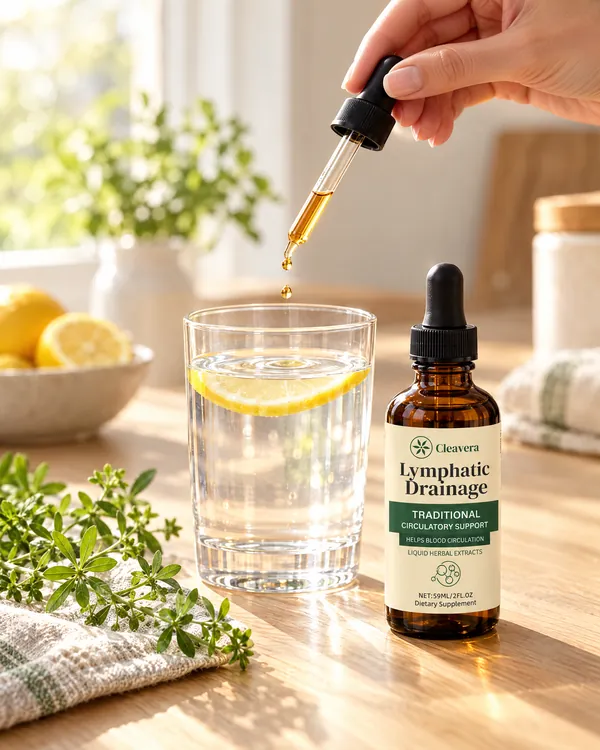
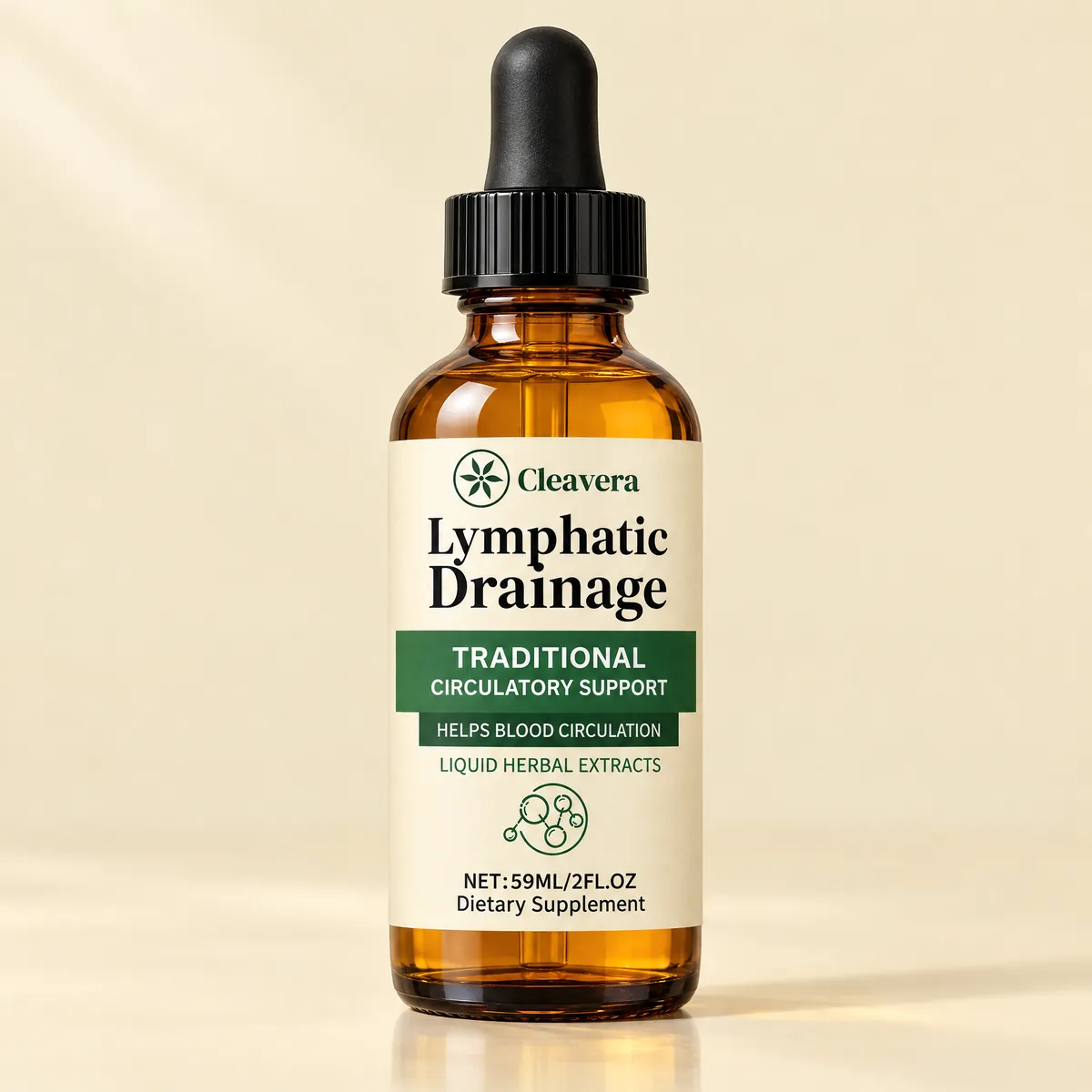
MedlinePlus, the NIH’s consumer health site, gives that advice for medicines: a cool, dry place such as a dresser drawer or a kitchen cabinet away from heat, rather than a bathroom cabinet, where steam from the shower and sink adds humidity. It also says to keep medicines in their original container. The label on Cleavera Lymphatic Drainage Drops asks the same: keep the bottle tightly capped in a cool, dry place away from sunlight.
Amber glass filters out much of the light that wears down plant compounds, but it isn’t a light-proof safe. A sunny windowsill or a shelf above the stove can still undo it. Keep the bottle in its box or behind a cupboard door, and out of reach and out of sight of children, as MedlinePlus advises for medicines.
Should you refrigerate herbal drops?
Only if the label tells you to. Cleavera’s label calls for a cool, dry place away from sunlight, not the fridge.
Homemade extracts are a different story. In the Ask Extension answer above, the specialist said a homemade glycerin extract keeps its quality best in a dark container in the refrigerator. If you’ve made your own, the fridge is the cautious choice. If you’ve bought one, the label is the rule.
How do you keep the dropper clean?
Never let the dropper touch your mouth, fingers, cup or counter, and put it straight back in the bottle. Anything the dropper touches can end up in the extract.
- Release, don’t touch. Let the serving fall into your drink, onto a clean spoon or just above your tongue.
- Don’t rinse it. If the dropper does touch something, don’t run it under the tap before putting it back. Water added to the bottle is exactly what microbes need.
- Cap it fully. Screw the cap on firmly after every serving. A loose cap lets in air and humidity.
- Keep it personal. One bottle, one person.
Our guide to how to take lymphatic drainage drops walks through a clean measuring routine with the 1 mL marking.
How can you tell if herbal drops have gone bad?
Look, sniff and check the date. Throw out herbal drops that show mold, smell sour or fermented, fizz, turn slimy, or change noticeably in color or texture, even if the date hasn’t passed.
- Mold: fuzzy spots, a film on the surface, or growth around the neck or the dropper.
- Smell: sour, yeasty, vinegary or simply different from when you opened it.
- Fizz: bubbles, a hiss when you open it or a domed cap, which can mean fermentation.
- Texture: slime, strings or thickening that a gentle shake doesn’t fix.
- Color: a marked change from when the bottle was new.
MedlinePlus applies the same rule to medicines: if one has changed in color, texture or smell, don’t take it, even before its expiration date. A little settling, though, is normal. Plant extracts can separate slightly as they sit, which is why many labels, including ours, say to shake gently before use. Sediment that mixes back in with a gentle shake, with no change in smell, isn’t a warning sign.
How long does an opened bottle of herbal drops last?
Use an opened bottle by its printed date, stored as the label directs. Cleavera’s label doesn’t give a separate after-opening period, and at the label serving a bottle doesn’t sit around for long: 59 servings at two a day lasts about a month.
If you take drops only now and then, check the date and give the bottle a look and a sniff before each serving. Our FAQ answers more questions about storing and using Cleavera.
How do you travel with herbal drops?
Pack herbal drops in your carry-on in a sealed bag, keep the bottle upright and tightly capped, and never leave it in a parked car.
The TSA limits carry-on liquids to travel-sized containers of 3.4 ounces (100 milliliters) or less, packed in a quart-sized bag. A 59 mL (2 fl oz) bottle fits, and larger containers belong in checked baggage. MedlinePlus also suggests keeping medicines in your carry-on, in their original bottles, when you fly.
Cars are the bigger risk. New York State’s Department of Motor Vehicles warns that the temperature inside a vehicle can rise 20 degrees in just 10 minutes, and that an outside temperature in the mid-60s can push the inside above 110°F. MedlinePlus specifically advises against keeping medicines in the glove compartment. For the rest of the trip, see our tips on keeping your circulation moving on long flights and road trips.
How should you store dried herbs and capsules?
Store dried herbs and capsules the same way: airtight, cool, dry and dark. The National Center for Home Food Preservation recommends airtight containers in a cool, dry, dark place to protect the color and fragrance of dried herbs. For capsules, keep the lid closed tight and leave any moisture-absorbing packet in the bottle. Our comparison of lymphatic drops vs. capsules vs. tea covers how the forms differ day to day.
Storage is part of safety. Keep herbal drops out of reach of children. Cleavera is for adults only. Talk to your healthcare professional before use if you’re pregnant or nursing, take medication (including blood thinners or hormone therapy), have a hormone-sensitive or bleeding condition, or have surgery scheduled. Don’t exceed the label serving, and stop use if you experience nausea or digestive upset.
Frequently asked questions
Can you use herbal drops after the expiration date?
We don’t recommend it. The FDA expects any date on a supplement label to be supported by data, so the date marks how long the maker can vouch for the product’s quality. Past it, there’s no such assurance. MedlinePlus advises throwing out medicines that are out of date, and that’s a sensible rule for herbal drops too.
Can you pour herbal drops into a smaller travel bottle?
It’s better not to. Every transfer exposes the extract to air and possible contamination, and a new bottle won’t carry the lot number, the date or the directions. MedlinePlus advises keeping medicines in their original container for similar reasons. A 59 mL bottle already fits within the TSA’s carry-on limit for liquids.
What if my bottle got very hot or very cold?
Let it return to room temperature, shake it gently and check it. If the smell, color or texture has changed, or the cap leaked, throw it out. If it seems unchanged, you can keep using it, but heat speeds the breakdown of plant compounds, so store it somewhere cooler from now on. When in doubt, replace it.
Do glycerin-based drops need preservatives?
Not necessarily. Glycerin itself helps preserve an extract by tying up water that microbes need, as long as there’s enough of it. Cleavera’s label lists only vegetable glycerin and water as other ingredients. That’s one reason a tight cap, a clean dropper and the printed date matter so much.
Sources
- NIH Office of Dietary Supplements. “Botanical Dietary Supplements: Background Information.” ods.od.nih.gov/factsheets/BotanicalBackground-Consumer
- U.S. Food and Drug Administration, Federal Register (2007). “Current Good Manufacturing Practice in Manufacturing, Packaging, Labeling, or Holding Operations for Dietary Supplements; Final Rule.” govinfo.gov/content/pkg/FR-2007-06-25
- U.S. Food and Drug Administration. “Water Activity (aw) in Foods.” fda.gov/…/inspection-technical-guides/water-activity-aw-foods
- Ask Extension (Cooperative Extension System). “How to store (refrigerate or not?) and shelf life of elderberry tincture made with glycerin only.” ask.extension.org/kb/faq.php?id=714650
- MedlinePlus, U.S. National Library of Medicine. “Storing your medicines.” medlineplus.gov/ency/patientinstructions/000534
- Transportation Security Administration. “Liquids, Aerosols, and Gels Rule.” tsa.gov/travel/security-screening/liquids-rule
- New York State Department of Motor Vehicles. “New York State Warns New Yorkers of Risk of Heatstroke.” dmv.ny.gov/news/new-york-state-warns-new-yorkers-of-risk-of-heatstroke
- National Center for Home Food Preservation, University of Georgia. “Herbs” (drying). nchfp.uga.edu/how/dry/recipes/herbs