How to Choose Lymphatic Drops: A Label-Reading Guide
On the shelf, most lymphatic drops look alike: a small amber bottle, a dropper, a botanical label. The differences are in the fine print. Here’s how to read it, and the red flags that should make you keep scrolling.

Lymphatic drops have become a crowded category, and the bottles don’t all hold the same thing. Under U.S. law, supplements don’t need FDA approval before they’re sold. The NIH’s Office of Dietary Supplements notes that companies are responsible for having evidence that their products are safe and that label claims are truthful and not misleading.
That makes the label your best tool. We make lymphatic drops, so we’ll use our own label as a worked example, including the places where it tells you less than it could.
How do you read a Supplement Facts panel?
Start at the top and work down: serving size, servings per container, then each dietary ingredient with its amount per serving. Below the panel, “Other ingredients” lists everything else in the bottle, such as the liquid base and any flavorings.
The federal rule for the panel, 21 CFR 101.36, sets the format. Here’s what each part tells you:
- Serving size. The amount the manufacturer recommends at one time. For liquids, look for a volume in milliliters (mL) rather than “one dropper” or “a few drops.”
- Amount per serving. Each dietary ingredient is listed with its amount. Herbs have no Daily Value, so you’ll see a symbol pointing to the footnote “Daily Value not established.”
- Liquid extracts. For an extract that still contains its liquid, the amount listed is the volume or weight of the whole extract. Brands may add the herb-to-solvent ratio and name the solvent, and the label must say so if the starting herb was fresh.
- Other ingredients. The base and additives. The NIH gives fillers, binders and flavorings as examples.
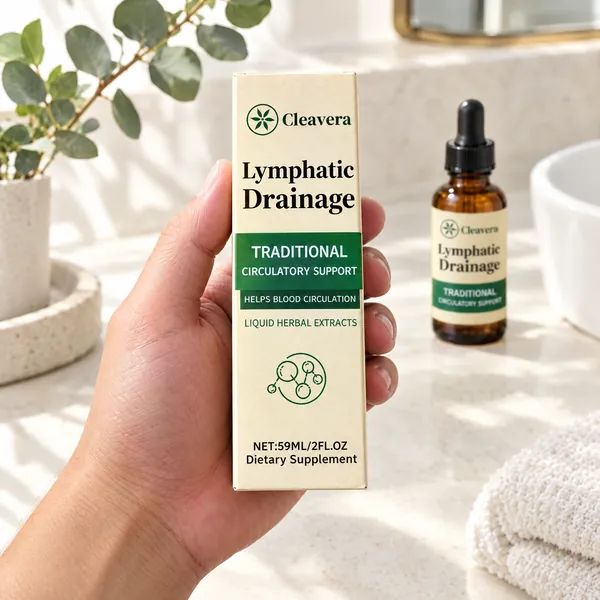
A worked example: Cleavera’s label
Here’s what our panel shows:
- Serving size 1 mL (about ¼ teaspoon), 59 servings per container.
- A 300 mg proprietary blend per 1 mL of cleavers aerial parts (Galium aparine), red clover flower (Trifolium pratense), stillingia root (Stillingia sylvatica) and prickly ash bark (Zanthoxylum americanum), with Daily Value not established.
- Other ingredients: vegetable glycerin and water.
It doesn’t show the amount of each herb or an herb-to-solvent ratio, the trade-off of a proprietary blend. The full panel is on our Lymphatic Drainage Drops page.
What does “proprietary blend” mean on a supplement label?
A proprietary blend is a named group of ingredients whose total weight is listed, but not the amount of each one. The ingredients must still be named, in descending order by weight, so the first herb listed is present in the largest amount.
Under 21 CFR 101.36, a blend must be labeled “Proprietary Blend” or with another descriptive or fanciful name. Brands often use blends to keep a formula from being copied. The downside for you is that you can’t compare per-herb amounts between products or check them against traditional use. A few ways to work around that:
- Compare the total blend weight per serving, not the bottle size.
- Read the order. An herb near the end of the list is present in a smaller amount than those before it.
- Email the brand and ask. A good company will tell you what it can. Ours is hello@cleavera.com.
Why do Latin names and plant parts matter?
They tell you exactly which plant is in the bottle and which part of it was used. Common names overlap and vary by region. A Latin name and a plant part don’t.
According to the FDA’s labeling guide for small businesses, botanicals must be listed by their standard common names from the reference book Herbs of Commerce, and the label must name the part of the plant used. When the Latin name can’t be found in that reference, it has to appear on the label. Many careful brands print it anyway.
Here’s why it matters. Cleavers is also sold as clivers or goosegrass, and all three names mean Galium aparine. Our guide on how to identify cleavers covers its other nicknames. Plant parts matter just as much, because roots, flowers and bark have different chemistry. Our ingredient guide lists the part we use for each herb. Be cautious with labels that list only a vague “lymph complex,” or herbs with no plant part at all.
Glycerin or alcohol: which base is better for lymphatic drops?
Neither is better for everyone. Alcohol extracts a broader range of plant compounds and keeps for years. Glycerin is alcohol-free, mild and lightly sweet. Choose based on whether you avoid alcohol, and check that the label names the base.
Vegetable glycerin is generally recognized as safe under FDA regulations when used according to good manufacturing practice. If you’re avoiding alcohol for health, recovery, religious or medication reasons, look for “alcohol,” “ethanol” or “grain alcohol” in the ingredient list or in the extract description, which can read like “in 70% ethanol.” Our comparison of glycerites and tinctures goes deeper.
What does “third-party tested” mean on supplements?
It means an outside lab or certifier checked something about the product, but the phrase has no single legal definition. Ask what was tested, which lab did the work and whether the results cover the batch you’re buying.
Every supplement maker has a legal baseline. The FDA’s good manufacturing practice rule for supplements, 21 CFR Part 111, requires companies to:
- set specifications for identity, purity, strength and composition, plus limits on contaminants
- run at least one appropriate test to confirm the identity of each dietary ingredient before using it
- assign batch or lot numbers, so each lot’s history can be traced
- keep reserve samples of each lot, held for a year past the shelf-life date when one is used
Third-party programs go further. The NIH’s Office of Dietary Supplements names ConsumerLab.com, NSF International and U.S. Pharmacopeia among the organizations that offer quality testing. Products that pass can display a seal showing they were properly manufactured, contain the listed ingredients and don’t contain harmful levels of contaminants. The NIH is clear that these seals don’t guarantee a product is safe or effective.
Good questions to ask any brand: Is each herb’s identity tested? Is the finished product tested for microbes and heavy metals? Who does the testing? Cleavera’s finished formula is third-party tested, and we’re happy to answer questions about it.
What are the red flags when buying lymphatic drops?
The biggest red flags are disease claims, before-and-after photos, pressure tactics and reviews you can’t verify. One is a reason to slow down. Several together are a reason to walk away.
- Disease or medical claims. Supplements may describe support for normal body function, but they can’t claim to address diseases. The FDA’s first tip-off to health fraud is a single product that claims to fix many unrelated problems. Words like “miracle,” “new discovery” and “secret ingredient” are tip-offs too, along with claims that the government or drug companies are hiding something.
- Before-and-after photos. Lighting, angle, posture and time of day change a photo. The FDA warns that personal “success” stories are easy to make up and no substitute for scientific evidence.
- Countdown timers and pressure tactics. An FTC staff report from September 2022 describes countdown timers designed to make shoppers believe they have limited time to buy, along with subscriptions made hard to cancel.
- “Was” and “compare at” prices that were never real. Under the FTC’s Guides Against Deceptive Pricing, a former price should be one the product was openly offered at for a reasonably substantial period. An inflated price set up only to be “slashed” creates a false bargain.
- Reviews you can’t verify. Watch for walls of five-star reviews with identical phrasing and no criticism. An FTC rule announced in August 2024 bans fake and AI-generated reviews, reviews bought on condition that they’re positive, undisclosed insider reviews and suppression of negative ones.
- Missing basics. No Supplement Facts panel before you buy, doses only in “drops,” or no way to contact the company.
Even a carefully made product isn’t right for everyone. Our guide to lymphatic drops side effects and who should skip them covers the safety side, and our article asking whether lymphatic drainage drops work covers the evidence.
What should a good lymphatic drops label include?
A clear serving size in milliliters, named herbs with Latin names and plant parts, a total blend weight, a named base, modest claims with an asterisk, and a lot number and date.
| What to check | Good sign | Red flag |
|---|---|---|
| Supplement Facts | Visible online before you buy | No panel, or a photo too small to read |
| Herb names | Common name, Latin name and plant part | A vague “complex” with no herbs listed |
| Blend | Total weight stated; brand answers questions | No weight at all |
| Serving | Measured in mL with a marked dropper | “A few drops” with no volume |
| Base | Named: glycerin, alcohol or water | Not stated |
| Quality | Lot number, date and specifics on testing | “Lab tested” with no details |
| Claims | Structure/function wording with an asterisk | Disease claims or guaranteed results |
| Selling | Steady prices and mixed, specific reviews | Countdown timers and never-real discounts |
A good label is a starting point, not a green light. Cleavera is for adults only. Talk to your healthcare professional before using any lymphatic drops if you’re pregnant or nursing, take medication (including blood thinners or hormone therapy), have a hormone-sensitive or bleeding condition, or have surgery scheduled. Red clover naturally contains plant isoflavones. Stop use if you experience nausea or digestive upset.
Frequently asked questions
Are more expensive lymphatic drops better?
Not necessarily. Price reflects ingredients, packaging, marketing and margins, and no studies compare brands of lymphatic drops head to head. Compare what you can see instead: the herbs and plant parts, the amount per serving, the base, the cost per serving and how openly the brand answers questions.
Is a USP or NSF seal required on supplements?
No. Quality seals from programs such as U.S. Pharmacopeia and NSF International are voluntary. According to the NIH, a seal shows a product was properly manufactured, contains the ingredients on the label and doesn’t contain harmful levels of contaminants. It doesn’t mean the product is safe for you or that it works.
What does a ratio like 1:4 mean on an herbal extract?
It describes how the extract was made: the weight of the starting herb compared with the volume of liquid. In a 1:4 extract, one part herb by weight, such as 1 gram, was extracted in four parts liquid by volume, such as 4 milliliters. A ratio doesn’t tell you which plant compounds ended up in the bottle.
Should lymphatic drops have an expiration date?
It’s a good sign. Federal manufacturing rules make shelf-life dating optional, so a printed date shows the brand has thought about how long its extract stays at its best. Glycerin-based extracts generally keep for less time than alcohol tinctures, so check the date and store the bottle somewhere cool and dark.
Can I look up a supplement’s label before I buy it?
Often, yes. The NIH’s Dietary Supplement Label Database collects labels from supplements sold in the United States, and reputable brands show the full Supplement Facts panel on their product pages. If you can’t find the panel anywhere before you buy, take that as a reason to wait.
Sources
- NIH Office of Dietary Supplements. “Dietary Supplements: What You Need to Know.” ods.od.nih.gov/factsheets/WYNTK-Consumer
- Electronic Code of Federal Regulations. “21 CFR 101.36: Nutrition labeling of dietary supplements.” ecfr.gov/current/title-21/section-101.36
- U.S. Food and Drug Administration. “Small Entity Compliance Guide: Statement of Identity, Nutrition Labeling and Ingredient Labeling of Dietary Supplements.” fda.gov/regulatory-information
- Electronic Code of Federal Regulations. “21 CFR Part 111: Current Good Manufacturing Practice in Manufacturing, Packaging, Labeling, or Holding Operations for Dietary Supplements.” ecfr.gov/current/title-21/part-111
- U.S. Food and Drug Administration. “6 Tip-offs to Rip-offs: Don’t Fall for Health Fraud Scams.” fda.gov/consumers/consumer-updates
- Federal Trade Commission. “Federal Trade Commission Announces Final Rule Banning Fake Reviews and Testimonials.” August 2024. ftc.gov/news-events/news/press-releases
- Federal Trade Commission. “FTC Report Shows Rise in Sophisticated Dark Patterns Designed to Trick and Trap Consumers.” September 2022. ftc.gov/news-events/news/press-releases
- Electronic Code of Federal Regulations. “16 CFR 233.1: Former price comparisons” (Guides Against Deceptive Pricing). ecfr.gov/current/title-16/section-233.1