Lymphatic Drainage Drops: Side Effects & Who Should Skip Them
Herbal doesn’t automatically mean right for everyone. Here’s an honest look at possible side effects, the ingredients that call for extra care, and when to talk to your clinician first.
We make lymphatic drainage drops, so you might expect us to say they’re for everyone. They’re not. Every herbal supplement, ours included, has people who should skip it or check with a professional first. Being clear about that is part of making a product you can trust.
This guide covers possible lymphatic drainage drops side effects, what to know about each ingredient in Cleavera, and how to decide whether a product like this belongs in your routine. It’s general information, not medical advice.
Possible side effects
Side effects from herbal extracts taken as directed are usually mild when they occur. The ones to watch for:
- Digestive upset. Nausea, stomach discomfort or loose stools. Adding your drops to a drink, or taking them with a meal, may help. Our guide to how to take lymphatic drainage drops has more on timing and mixing.
- A warming or tingling taste. Prickly ash bark is known for a mild tingling sensation in the mouth. That’s a trait of the plant rather than a reaction.
- Allergic reactions. Uncommon, but possible with any plant product. Signs include rash, itching or hives.
- Headache or general discomfort. Some people notice mild effects when starting any new supplement.
If any of these persist or bother you, stop taking the product. If you’re unsure whether a symptom is related, ask your clinician or pharmacist.
Ingredient by ingredient
Cleavers (Galium aparine)
Cleavers has a long history as a gentle spring herb and is generally regarded as mild. As with many traditional herbs, though, formal safety research is limited, so the usual precautions for pregnancy, breastfeeding and chronic health conditions still apply.
Red clover (Trifolium pratense)
Red clover flowers contain isoflavones, plant compounds with weak estrogen-like activity. Reputable sources advise caution. The NIH’s National Center for Complementary and Integrative Health (NCCIH) says red clover supplements may be unsafe during pregnancy or breastfeeding, and Memorial Sloan Kettering’s About Herbs database also flags hormone-sensitive conditions and blood thinners. Talk to your clinician first if you:
- are pregnant, trying to conceive or breastfeeding
- have a current or past hormone-sensitive condition, such as some breast or uterine conditions, endometriosis or uterine fibroids
- take hormone therapy, including hormonal birth control or menopausal hormone therapy
- take blood thinners or have a bleeding disorder, since red clover naturally contains coumarin compounds and some references advise caution with anticoagulant and antiplatelet medicines
Stillingia (Stillingia sylvatica)
Stillingia root has been used in traditional formulas for well over a century, always in small amounts. It belongs to the spurge family, and its root is acrid. Larger doses can cause nausea, vomiting and diarrhea; the 1898 King’s American Dispensatory put it bluntly: “in large doses, stillingia vomits and purges.” That’s why it’s used sparingly in blends like ours, and why you should never take more than the label directs. Stillingia is also generally avoided during pregnancy and breastfeeding.
Prickly ash (Zanthoxylum americanum)
Prickly ash bark is a warming herb with a distinctive tingle. Traditional and modern references generally advise avoiding it during pregnancy and breastfeeding. As with any supplement, check with your clinician or pharmacist if you take prescription medication.
The base: vegetable glycerin and water
Vegetable glycerin is widely used in foods, where US regulations list it as generally recognized as safe, and it is generally well tolerated. In large amounts it can loosen stools in some people. The amount in a 1 mL serving is small, but it’s worth knowing if your digestion is sensitive.
Who should skip lymphatic drainage drops, or ask first
| If you… | Our suggestion |
|---|---|
| are pregnant, trying to conceive or breastfeeding | Skip it unless your clinician specifically says otherwise |
| are under 18 | Skip it. Cleavera is for adults only |
| have a current or past hormone-sensitive condition | Talk to your clinician first, because of red clover’s isoflavones |
| take hormone therapy or hormonal birth control | Ask your clinician or pharmacist first |
| take blood thinners or have a bleeding disorder | Ask your clinician first |
| have surgery or a dental procedure coming up | Tell your care team; most will ask you to pause herbal supplements beforehand |
| take prescription medication or have a chronic condition, such as liver or kidney disease | Check with your clinician or pharmacist |
| are allergic to any ingredient | Don’t use it |
Surgery and medication interactions
Some herbs can affect bleeding, blood pressure or the way the body processes medicines. For that reason, many surgical teams ask patients to stop herbal supplements in the weeks before a procedure; the American Society of Anesthesiologists notes that this can mean stopping at least two weeks ahead. Tell your surgeon, anesthesiologist and dentist about everything you take, including teas, drops and powders, and follow their instructions on when to stop and when to restart.
If you take prescription medication, bring the bottle to your next appointment or pharmacy visit. A pharmacist can check for known interactions with your current medicines.
When should you stop taking lymphatic drops?
Stop taking any herbal supplement and contact a healthcare professional if you notice:
- nausea, vomiting, diarrhea or stomach pain that doesn’t settle
- a rash, itching or hives
- unusual bruising or bleeding
- any new symptom that concerns you
Seek emergency care right away for signs of a severe allergic reaction, such as trouble breathing or swelling of the lips, tongue or throat.
Our standing safety guidance. Cleavera is for adults only. Consult your healthcare professional before use if you are pregnant or nursing, taking medication (including blood thinners or hormone therapy), have a hormone-sensitive or bleeding condition, or are scheduled for surgery. Do not exceed the recommended dose. Stop use if you experience nausea or digestive upset. Keep out of reach of children.
How to read the label
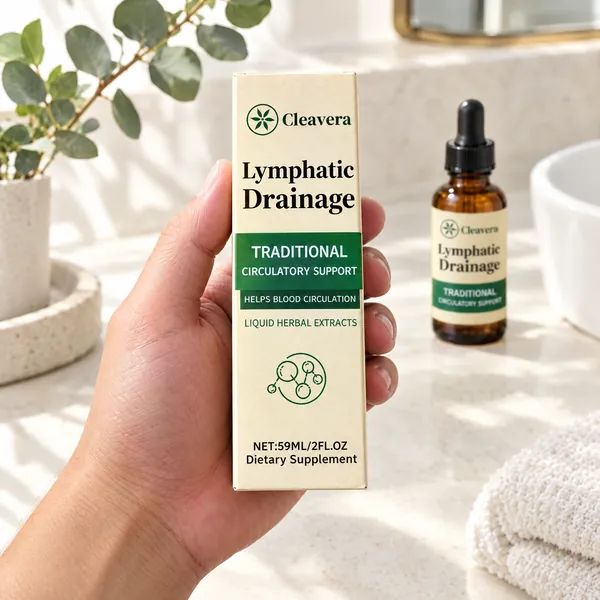
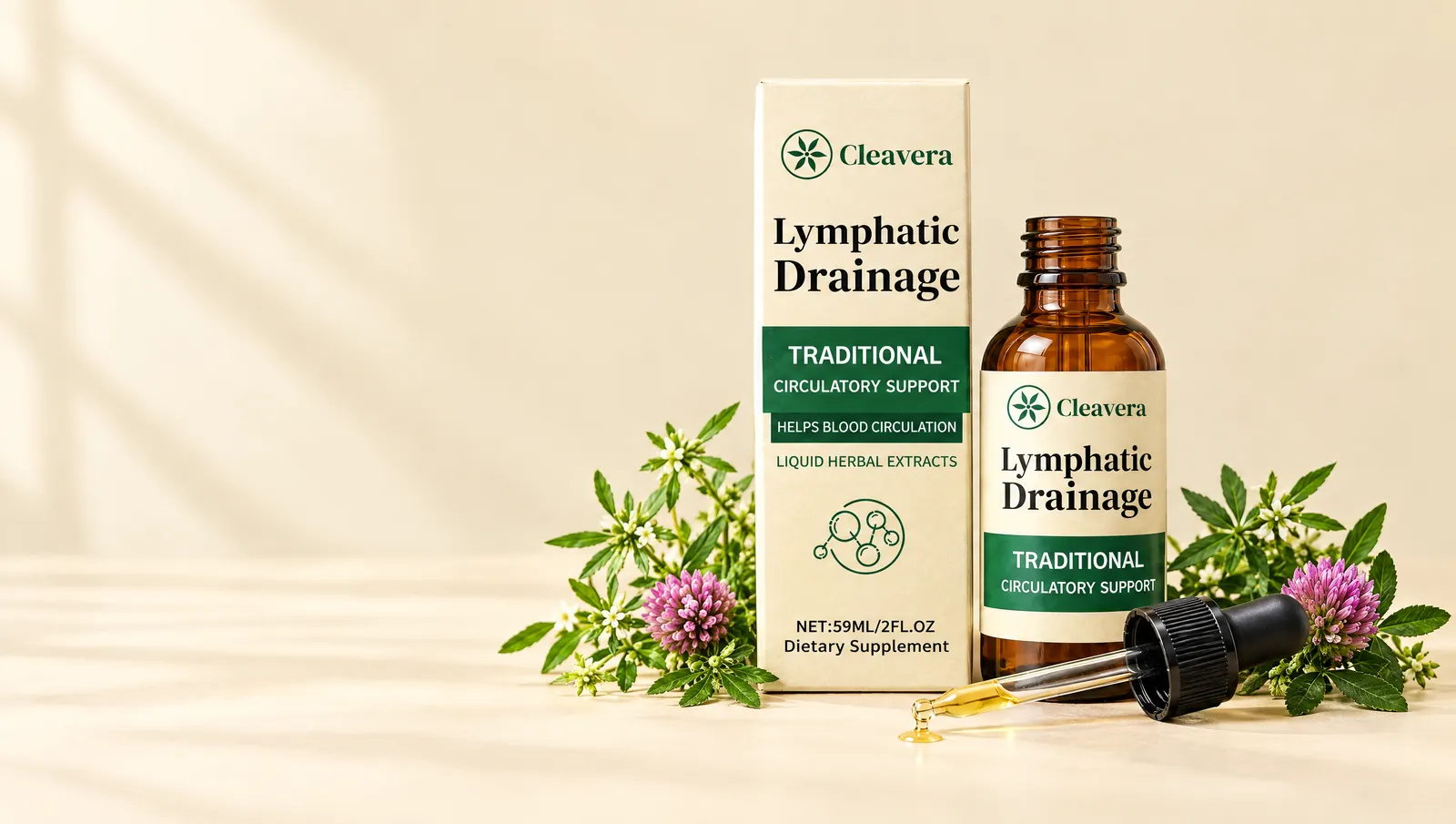
A supplement label tells you more than you might think. Here’s what to look for on Cleavera, or on any herbal product (our guide to choosing lymphatic drops goes further):
- Supplement Facts panel. The serving size (1 mL for Cleavera), servings per container (59) and what’s in each serving.
- Proprietary blend. Cleavera lists a 300 mg blend of four named botanicals and the plant part used for each. A proprietary blend shows the total amount rather than the amount of each herb, so bring the label to your clinician and email us at hello@cleavera.com with any questions.
- Other ingredients. For Cleavera, that’s vegetable glycerin and water. No alcohol.
- Directions. 1 mL twice daily, added to your favorite drink. More is not better, so never exceed the stated serving.
- Warnings. Read them every time you try a new product, and take them seriously.
- The asterisk. Statements marked with an asterisk haven’t been evaluated by the FDA. Dietary supplements aren’t intended to diagnose, treat, cure or prevent any disease.
- Lot number and date. Most supplements print both. They’re useful if you ever need to report a reaction or ask a question.
- Testing. Look for brands that test their products. Cleavera’s finished formula is third-party tested.
You can see the full Supplement Facts on the Lymphatic Drainage Drops page and read about each plant in our ingredient guide.
Do lymphatic drops work?
It’s a fair question, and you deserve a straight answer. Cleavers, red clover, stillingia and prickly ash have long histories in Western herbal tradition, and they’re traditionally used to support healthy lymphatic flow.* But rigorous clinical research on these herbs for lymphatic support is limited, and there are no large studies showing that lymphatic drops, ours included, produce specific results. We go deeper in Do Lymphatic Drainage Drops Work? An Honest Look at the Evidence.
So we don’t promise outcomes. We offer a carefully made, alcohol-free extract of traditional herbs for people who enjoy herbal rituals, and we encourage pairing it with the habits that support your lymphatic system every day: movement, deep breathing, hydration and sleep. Our 10 daily habits for healthy lymph flow covers those, How It Works explains the lymphatic system in plain language, and our herbal history article explains where these plants come from.
Talk to your clinician
Bring the bottle, or a photo of the label, to your doctor, nurse practitioner or pharmacist. Questions worth asking:
- Is this safe with my current medications and health conditions?
- Should I pause it before any upcoming procedures?
- Does anything in my health history make red clover or the other herbs a poor fit?
- Which side effects should I watch for, and when should I call you?
Frequently asked questions
What are the side effects of lymphatic drainage drops?
When side effects occur, they’re usually mild and digestive, such as nausea, stomach discomfort or loose stools. Allergic reactions are possible with any plant product. Stop use if you notice any unusual reaction, and talk to your healthcare professional.
Who should not take lymphatic drainage drops?
Skip them, or talk to your clinician first, if you’re pregnant, trying to conceive or breastfeeding; under 18; have a hormone-sensitive or bleeding condition; take blood thinners, hormone therapy or other prescription medication; or have surgery scheduled.
Do lymphatic drops work?
The herbs in lymphatic drops have a long history of traditional use, but clinical research on them is limited and no product can promise specific results. Cleavera’s herbs are traditionally used to support healthy lymphatic flow.* Movement, hydration, breathing and sleep remain the foundation.
Can I take more than the recommended dose?
No. With herbal supplements, more is not better. Stillingia in particular is traditionally used only in small amounts, and larger doses can cause nausea. Follow the label: 1 mL twice daily.
Sources
- NIH National Center for Complementary and Integrative Health. “Red Clover: Usefulness and Safety.” nccih.nih.gov/health/red-clover
- Memorial Sloan Kettering, About Herbs. “Red Clover.” mskcc.org/…/herbs/red-clover
- NIH National Center for Complementary and Integrative Health. “Using Dietary Supplements Wisely.” nccih.nih.gov/health/using-dietary-supplements-wisely
- U.S. Food and Drug Administration. “FDA 101: Dietary Supplements.” fda.gov/consumers/consumer-updates/fda-101-dietary-supplements
- American Society of Anesthesiologists. “Herbal and Dietary Supplements and Anesthesia.” madeforthismoment.asahq.org/…/ASA_Supplements-Anesthesia_Updated-1.pdf
- Felter, H. W. & Lloyd, J. U. King’s American Dispensatory (1898), via Henriette’s Herbal Homepage. “Stillingia.” henriettes-herb.com/eclectic/kings/stillingia
- Electronic Code of Federal Regulations. “21 CFR 182.1320 Glycerin.” ecfr.gov/current/title-21/…/section-182.1320