Prickly Ash Bark: The “Toothache Tree” in Herbal Tradition
A thorny, lemon-scented shrub with a tingle you can feel on your tongue: what prickly ash is, why it’s called the toothache tree, what research shows and who should skip it.
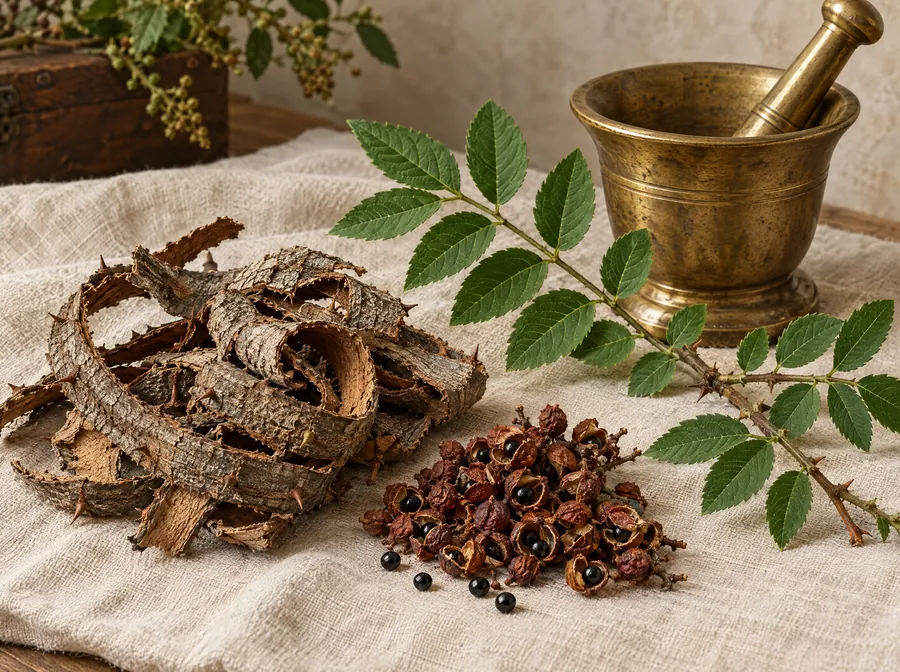
Take Cleavera straight from the dropper and you may notice a gentle, warming tingle on your tongue. That sensation comes from prickly ash bark, the fourth herb in the formula, and it’s the same quality that gave the plant its most famous nickname.
This guide covers the plant, how to recognize it, why it tingles, how it was used in North American and Eclectic tradition, what research has and hasn’t found, and who should avoid it.
What is prickly ash?
Prickly ash is Zanthoxylum americanum, a thorny shrub or small tree in the citrus family (Rutaceae), and its dried bark is the part used in herbal tradition. USDA calls it common pricklyash; other names include northern prickly ash, toothache tree and yellow wood.
The names tell its story. According to the 1898 King’s American Dispensatory, “prickly ash” comes from its ash-like compound leaves and prickly stems, though it isn’t related to true ash trees. The genus name, often spelled Xanthoxylum in older books, joins the Greek words for “yellow” and “wood.” A southern relative, Zanthoxylum clava-herculis, is known as southern prickly ash or Hercules’ club, and its bark was used in much the same way.
How do you identify prickly ash?
Look for a many-branched, thorny shrub with feathery compound leaves and paired prickles on its branches, and break a twig: it smells strongly of crushed lemon peel. That scent is the quickest giveaway.
A USDA Natural Resources Conservation Service plant guide describes it in detail. It grows 1 to 8 meters (about 3 to 26 feet) tall, with dark brown branches armed with prickles 8 to 13 mm long. Each leaf carries 5 to 11 glossy, dark green leaflets dotted with translucent glands. Small greenish-yellow flowers open in spring before the leaves, and by late summer the tiny fruit capsules turn from green to reddish brown, splitting to show a single black seed. It often forms dense thickets, and giant swallowtail butterflies lay their eggs on its leaves.
Don’t confuse it with devil’s walking stick (Aralia spinosa), an unrelated spiny shrub that sometimes shares the names prickly ash and Hercules’ club.
| Feature | Details |
|---|---|
| Latin name | Zanthoxylum americanum Mill. (older spelling Xanthoxylum) |
| Plant family | Rutaceae (citrus or rue family) |
| Common names | Common pricklyash, northern prickly ash, toothache tree, yellow wood |
| Part used | Bark (the berries were also used historically) |
| Life cycle | Perennial shrub or small tree, often forming thickets |
| Native range | Southwestern Quebec and Ontario to eastern North Dakota, south to Georgia, Alabama, Oklahoma and eastern Kansas |
| Habitat | Riverbanks, moist ravines, thickets and woods; also rocky hillsides and bluffs |
| Taste of the bark | Aromatic and sweetish, then bitter, with a lingering pungency |
| In Cleavera | Prickly ash bark extract, one of four botanicals |
Why is prickly ash called the toothache tree?
Because people chewed the bark, or packed it around an aching tooth, for the tingling, numbing sensation it produces. King’s says simply that its reputed use for toothache “has given it the name of Toothache tree.”
The practice is old and widespread. The USDA plant guide lists more than a dozen Native American nations, among them the Cherokee, Iroquois, Ojibwa, Meskwaki and Potawatomi, who used prickly ash for many purposes, including chewing the bark and packing powdered bark around a sore tooth. European settlers adopted the custom, and the 1918 United States Dispensatory still described the bark as a popular masticatory for toothache. That’s folk history, not dental advice: a sore tooth needs a dentist.
What makes prickly ash bark tingle?
Zanthoxylum plants contain pungent compounds called alkylamides, and the best studied, hydroxy-alpha-sanshool, creates the buzzing tingle of Sichuan pepper, which comes from Asian relatives of prickly ash.
Scientists have worked out a surprising amount about that sensation. A 2008 study from the University of California, San Francisco found that hydroxy-alpha-sanshool excites touch- and pain-sensing nerve cells by blocking a group of “two-pore” potassium channels. In a 2013 study from University College London, volunteers who had Sichuan pepper applied to their lips matched the tingle to a vibration on their fingertip of about 50 cycles per second, the frequency range of nerve fibers that sense light flutter.
One caution: most of this research used Asian species. Northern prickly ash itself has been studied far less, so its exact tingling compounds are less well documented. King’s described the bark’s effect from experience: chewed, it gives “an aromatic, sweetish taste, followed by bitterness and persistent acridity,” along with “a copious flow of saliva.”
How was prickly ash used in Eclectic medicine?
Eclectic physicians valued prickly ash bark as a warming stimulant and often added it to formulas alongside other herbs. King’s classed the bark as a stimulant and wrote that in the stomach “it creates a sense of warmth.”
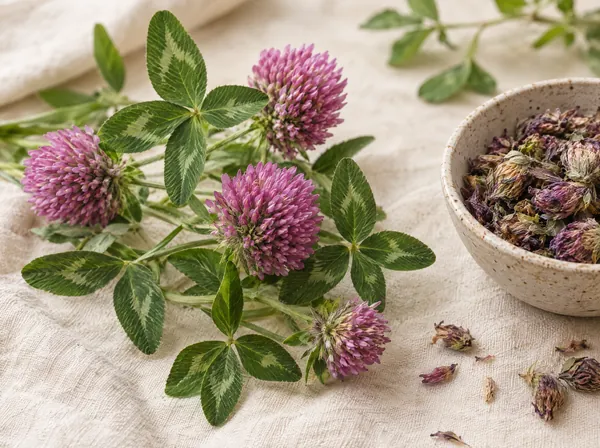
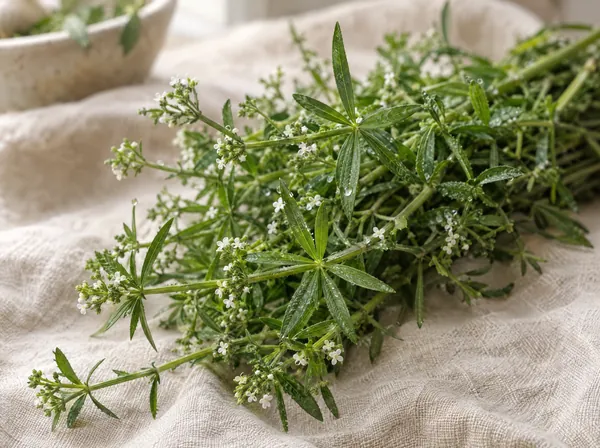
Prickly ash was also mainstream. The 1918 United States Dispensatory lists both northern and southern prickly ash bark as official U.S. Pharmacopoeia drugs, and notes that the berries entered the fourth edition of the National Formulary for use in a compound fluidextract of stillingia. King’s adds that prickly ash was an ingredient in Trifolium Compound, a proprietary blend named for red clover. In other words, three of Cleavera’s four herbs were already keeping company more than a century ago.
Today, prickly ash bark is traditionally used to support healthy circulation.* For more on its companions, see our stillingia root guide, our red clover guide and the herbal tradition behind all four herbs.
What does research say about prickly ash?
There are no clinical trials of prickly ash bark in people. Research on northern prickly ash so far is limited to laboratory studies of its chemistry.
A 2005 University of Ottawa study found that extracts of the leaf, fruit, stem, bark and root inhibited a range of fungi in lab dishes. The activity depended on light and tracked with furanocoumarins such as psoralen, which were plentiful in the fruit and leaves but low in the bark and wood. A 2001 Rutgers study isolated several coumarin-family compounds and two lignans, sesamin and asarinin, from the plant and tested them on cells grown in the lab.
Test-tube findings like these don’t show what the bark does in the body, and no studies have measured its effect on circulation in people. Our article Do Lymphatic Drainage Drops Work? looks at the evidence for the whole formula with the same honesty.
Who should avoid prickly ash?
Avoid prickly ash if you’re pregnant, trying to conceive or breastfeeding, and ask a clinician first if you take blood thinners or have surgery coming up. Formal safety research is scarce, so these cautions come from tradition and the plant’s chemistry.
- Pregnancy and breastfeeding. King’s called prickly ash an emmenagogue, an old term for something believed to bring on menstruation, and the USDA guide records a bark decoction used historically to end pregnancies.
- Under 18. It hasn’t been studied in children or teens.
- Blood thinners, bleeding conditions or surgery. The plant contains coumarin-family compounds, and its interactions with medicines haven’t been studied, so check with your clinician or pharmacist.
- Sun sensitivity. Furanocoumarins like psoralen can make skin more sensitive to sunlight. The 2005 study found them mostly in the fruit and leaves, with low levels in the bark.
- A sensitive stomach. King’s noted its warming effect on the stomach. If a warm, tingling herb doesn’t sit well with you, stop.
Our guide to lymphatic drainage drops side effects and who should skip them covers all four herbs together.
A tingle is normal; a reaction isn’t. A mild warming tingle on the tongue is a known trait of prickly ash. Stop use if you notice a rash, hives, itching or digestive upset, and seek emergency care for trouble breathing or swelling of the lips, tongue or throat.
Talk to your healthcare professional before use if you take medication (especially blood thinners), have a bleeding condition, or are scheduled for surgery.
How does prickly ash appear in Cleavera?
Cleavera uses prickly ash bark, extracted in vegetable glycerin and water, as one of four botanicals in a 300 mg proprietary blend in every 1 mL serving. It’s the source of the gentle warming tingle you may notice when you take the drops.
Prickly ash bark is traditionally used to support healthy circulation,* and alongside cleavers, red clover and stillingia it’s part of a formula traditionally used to support healthy lymphatic flow.* If the tingle is more than you’d like, stir your 1 mL into water, tea or juice instead of taking it straight; our guide to how to take lymphatic drainage drops has more ideas. Meet every plant on our ingredients page, or see the full Supplement Facts on the Lymphatic Drainage Drops page.
Frequently asked questions
Is prickly ash the same as Sichuan pepper?
No, but they’re close relatives. Sichuan pepper is the dried fruit husk of Asian Zanthoxylum species, while prickly ash bark comes from the North American species Zanthoxylum americanum. They share a genus and its signature tingle, but they are different plants, used in different ways.
Is prickly ash related to ash trees?
No. True ash trees belong to the genus Fraxinus in the olive family. As King’s American Dispensatory explains, prickly ash got its name from its ash-like compound leaves and prickly stems. It actually belongs to the citrus family, which is why its crushed twigs smell of lemon peel.
Is the tingle from prickly ash an allergic reaction?
Usually not. A mild tingling or warming feeling on the tongue is a known trait of the plant. Signs of an allergic reaction are different: hives, itching, a rash, or swelling of the lips, tongue or throat. Stop use if you notice those, and seek emergency care for any trouble breathing.
What is Hercules’ club?
Hercules’ club is a common name for southern prickly ash, Zanthoxylum clava-herculis, a southeastern relative whose bark was also official in the U.S. Pharmacopoeia. Confusingly, the same name is sometimes given to devil’s walking stick (Aralia spinosa), an unrelated spiny shrub. Latin names are the only reliable way to tell them apart.
Can you grow prickly ash in a garden?
Yes. The USDA describes it as a very hardy shrub that tolerates poor soils and partial shade to full sun. It spreads by suckers and has sharp thorns, so it suits a barrier hedge or wildlife planting better than a flower border. Giant swallowtail butterflies lay their eggs on its leaves.
Sources
- USDA Natural Resources Conservation Service. “Plant Guide: Common Pricklyash, Zanthoxylum americanum P. Mill.” plants.usda.gov/…/pg_zaam.pdf
- Lady Bird Johnson Wildflower Center, University of Texas at Austin. “Zanthoxylum americanum (Common pricklyash).” wildflower.org/plants/result.php?id_plant=ZAAM
- Felter, H. W. & Lloyd, J. U. King’s American Dispensatory (1898), via Henriette’s Herbal Homepage. “Xanthoxylum.—Prickly Ash.” henriettes-herb.com/eclectic/kings/xanthoxylum
- Remington, J. P., Wood, H. C., et al. The Dispensatory of the United States of America (1918), via Henriette’s Herbal Homepage. “Xanthoxylum.” henriettes-herb.com/eclectic/usdisp/xanthoxylum
- Bautista, D. M., et al. Nature Neuroscience (2008). “Pungent agents from Szechuan peppers excite sensory neurons by inhibiting two-pore potassium channels.” pubmed.ncbi.nlm.nih.gov/18568022
- Hagura, N., Barber, H. & Haggard, P. Proceedings of the Royal Society B (2013). “Food vibrations: Asian spice sets lips trembling.” pubmed.ncbi.nlm.nih.gov/24026819
- Bafi-Yeboa, N. F., et al. Phytomedicine (2005). “Antifungal constituents of northern prickly ash, Zanthoxylum americanum Mill.” pubmed.ncbi.nlm.nih.gov/15957372
- Ju, Y., et al. Phytotherapy Research (2001). “Cytotoxic coumarins and lignans from extracts of the northern prickly ash (Zanthoxylum americanum).” pubmed.ncbi.nlm.nih.gov/11507740