Stillingia Root (Queen’s Delight): History, Uses & Cautions
A modest wildflower of the southern pinelands with a thick, acrid root: what stillingia is, how 19th-century doctors used it, and why it’s only ever used in small amounts.
Of the four herbs in Cleavera, stillingia is the least known and the one that calls for the most respect. Above ground it’s a modest wildflower of the American South. Below ground it grows a thick, woody root that, for much of the 1800s, was one of the best-known plants in American medicine.
This guide covers what stillingia is, where it grows, how Eclectic physicians used it, why it’s only ever used sparingly, what modern research has and hasn’t shown, and who should avoid it.
What is stillingia?
Stillingia is Stillingia sylvatica, a perennial wildflower in the spurge family (Euphorbiaceae), and its root is the part used in herbal tradition. Its common names include queen’s delight, queen’s root and silver leaf, and older texts sometimes call it Sapium sylvaticum.
According to the 1898 King’s American Dispensatory, the genus was named in honor of Benjamin Stillingfleet, an 18th-century English botanist and writer. Its family is a large and varied one that also includes poinsettias, cassava and the rubber tree, and many of its members carry a milky sap. Stillingia does too.
Where does stillingia grow, and what does it look like?
Stillingia grows wild in sandy, sunny places across the southeastern and south-central United States, from pine barrens and sandhills to dry, open woods. USDA’s PLANTS database lists it as native to the lower 48 states, and the Lady Bird Johnson Wildflower Center records it from Virginia and the Carolinas south to Florida and west into Kansas, Oklahoma, Texas and New Mexico.
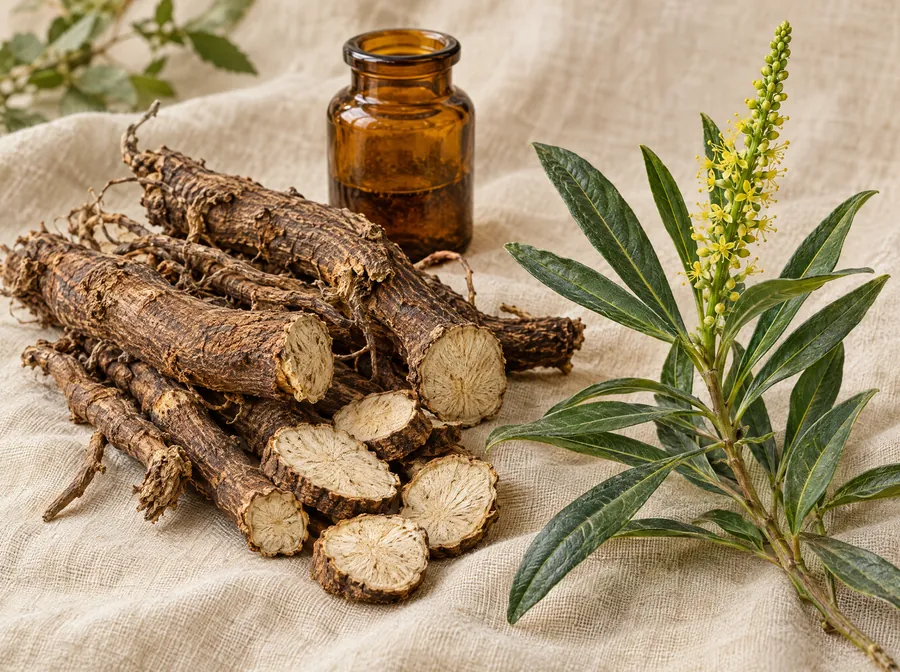
The plant grows up to about 4 feet tall, though it’s often shorter. Its smooth, slightly angled stems bleed a milky sap when broken, and its lance-shaped leaves are leathery and finely toothed. From early spring into summer it sends up slender spikes of tiny yellow flowers. The 1918 United States Dispensatory notes that male flowers crowd the upper part of each spike while a few female flowers sit at the base, ripening into three-seeded capsules.
The root is the surprise. The official description quoted in King’s puts it at about 12 inches long and nearly 2 inches thick: grayish-brown, wrinkled, tough and fibrous, with an odor described as “peculiar and unpleasant” and a taste that is “bitter, acrid, and pungent.”
| Feature | Details |
|---|---|
| Latin name | Stillingia sylvatica L. (older synonym Sapium sylvaticum) |
| Plant family | Euphorbiaceae (spurge family) |
| Common names | Queen’s delight, queen’s root, silver leaf |
| Part used | Root |
| Life cycle | Perennial herb, up to about 4 feet tall |
| Native range | Southeastern and south-central United States |
| Habitat | Sandy soils: pine barrens, sandhills, dry open woods |
| Flowers | Tiny yellow flowers on a spike, roughly March to June |
| Notable compounds | Irritant diterpene esters in the root |
| In Cleavera | Stillingia root extract, one of four botanicals |
How was stillingia used in Eclectic medicine?
Stillingia root was a signature plant of 19th-century American medicine, used fresh, in small doses and almost always alongside other herbs. The Eclectic physicians, who built their practice around North American plants, wrote about it at length.
King’s American Dispensatory lists a whole shelf of preparations: a fluid extract, a tincture, a syrup of queen’s root, a compound syrup, compound troches and even a liniment. Its authors grouped stillingia with the “alteratives” and described it, in smaller doses, as “exerting an influence over the secretory and lymphatic functions.”* That is a 19th-century opinion, not modern evidence, but it is where stillingia’s place in today’s lymphatic tradition begins. You can read that broader story in the herbal tradition behind cleavers, red clover, stillingia and prickly ash.
Freshness mattered to them. King’s says the root “loses much of its medicinal virtue by age,” and Harvey Felter’s 1922 Eclectic Materia Medica blamed many failures on “medicines prepared from old and worthless material.” Stillingia was also mainstream: the 1918 United States Dispensatory still listed the root as an official U.S. Pharmacopoeia drug, with compound syrups in the National Formulary.
Today, stillingia root is traditionally included in herbal blends to support the body’s natural cleansing processes.*
Why is stillingia used only in small amounts?
Because stillingia root is strong: in larger doses it causes vomiting and diarrhea, and the root contains irritant compounds typical of the spurge family. Historical writers knew this well; King’s put it bluntly: “In large doses, stillingia vomits and purges.”
King’s went on to describe a burning sensation in the stomach and a general feeling of prostration after large doses. Modern chemistry offers a likely explanation. A 1980 study by Adolf and Hecker, recorded in the USDA’s Dr. Duke’s Phytochemical and Ethnobotanical Databases, isolated irritant diterpene esters from the roots, including prostratin and compounds named “Stillingia factors.”
King’s and later Eclectic texts describe these effects of too much stillingia:
- nausea, vomiting and diarrhea
- a burning feeling in the mouth, throat or stomach
- weakness and exhaustion (what King’s called “prostration”)
The NIH’s Office of Dietary Supplements notes that the actions of botanicals range from mild to powerful, and that you shouldn’t exceed a product’s recommended dose. Stillingia sits toward the powerful end, which is why tradition has always used it as a small part of a blend.
What does modern research say about stillingia?
Very little. No clinical trials of stillingia in people have been published, so there is no modern evidence for any proposed use.
The research that does exist is laboratory chemistry. Diterpene esters from the root have been studied in the lab, but stillingia itself hasn’t been tested in people. Many recent studies that turn up under “stillingia” concern different species, such as Stillingia loranthacea from South America, so their findings don’t transfer to queen’s delight.
Skepticism isn’t new, either. The 1918 United States Dispensatory, while still listing stillingia as official, concluded: “The drug is probably, however, without any real value.” We think readers deserve that full picture. We look at the evidence for lymphatic herbs more broadly in Do Lymphatic Drainage Drops Work? An Honest Look at the Evidence.
Who should avoid stillingia?
Skip stillingia entirely if you’re pregnant, trying to conceive, breastfeeding or under 18, and ask a clinician first if any of the following apply. There is no safety research in these groups, and its best-documented effects are digestive.
- You have a digestive condition or a sensitive stomach.
- You take prescription medicines or have a long-term health condition, such as a liver or kidney condition.
- You have surgery or a dental procedure coming up.
- You’ve had nausea or digestive upset from an herbal product before.
Never take stillingia on its own or in larger amounts than a label directs. Our guide to lymphatic drainage drops side effects and who should skip them covers the other three herbs, too.
Small amounts, by design. Stillingia is the strongest of the four herbs in Cleavera. Use any product containing it only as directed, and stop if you notice nausea, vomiting, diarrhea or a burning feeling in your stomach. Skip it if you are pregnant, nursing or under 18, and talk to your healthcare professional first if you take medication or have surgery scheduled.
Don’t forage it. The plant’s milky sap and root can irritate skin and eyes, and wild harvesting isn’t a safe way to dose a strong root.
How does stillingia appear in Cleavera?
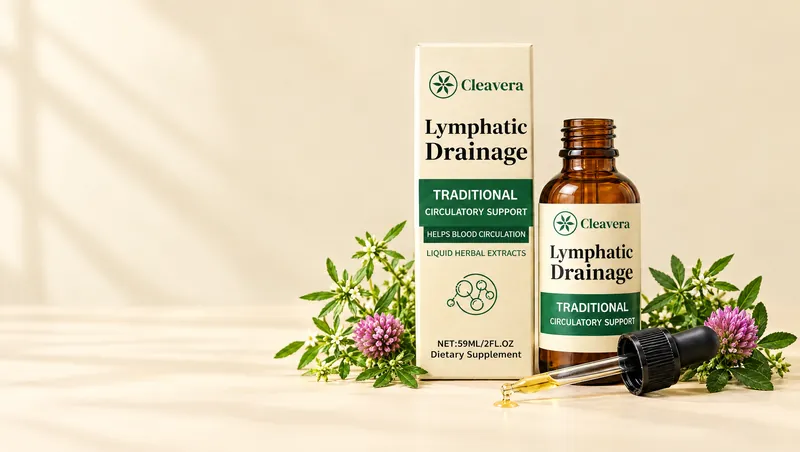
Cleavera includes stillingia root, extracted in vegetable glycerin and water, as one of four botanicals in a 300 mg proprietary blend in every 1 mL serving. It’s never a standalone extract.
That mirrors how it has traditionally been used: in small amounts, alongside gentler herbs. Stillingia root is traditionally included in herbal blends to support the body’s natural cleansing processes,* and together with cleavers, red clover and prickly ash it forms a formula traditionally used to support healthy lymphatic flow.* The label lists the blend total rather than each herb’s amount, and the directions are simple: 1 mL twice daily, never more.
Read about its partners in our red clover guide and our prickly ash bark guide, see every plant on our ingredients page, or view the full Supplement Facts on the Lymphatic Drainage Drops page.
Frequently asked questions
Why is stillingia called queen’s delight?
No one knows for certain. The names queen’s delight and queen’s root were already standard in 19th-century American references such as King’s American Dispensatory, which also lists silver leaf. The botanical name is better documented: King’s notes that the genus honors Benjamin Stillingfleet, an 18th-century English botanist.
Is stillingia oil the same as stillingia root?
No. In industry, stillingia oil usually means an oil from the seeds of the Chinese tallow tree, a different plant used for paints and varnishes. The oil of stillingia in 19th-century texts was something else again: a concentrated alcohol extract of the root that King’s considered too acrid to take unless well mixed with a syrupy base.
Can you take stillingia on its own?
It isn’t a good idea. Traditional practice almost always combined stillingia with other herbs in small amounts, there’s no modern safety research to guide solo use, and larger doses cause vomiting and diarrhea. If you use a product that contains stillingia, take only the amount on the label.
Is it safe to dig up or handle stillingia plants?
Handle it with care. Like many spurge-family plants, stillingia releases a milky sap when cut or broken, and its root contains irritant compounds. Wear gloves, keep the sap away from your eyes, and wash any skin it touches. Leave wild plants to experienced harvesters who are certain of their identification.
Does stillingia root lose strength over time?
Nineteenth-century physicians thought so. King’s American Dispensatory said the root is much more active fresh and loses much of its virtue with age, and Felter blamed many disappointing results on old material. For any finished herbal product today, follow the date on the bottle and store it cool, dark and tightly capped.
Sources
- Felter, H. W. & Lloyd, J. U. King’s American Dispensatory (1898), via Henriette’s Herbal Homepage. “Stillingia.” henriettes-herb.com/eclectic/kings/stillingia
- Felter, H. W. The Eclectic Materia Medica, Pharmacology and Therapeutics (1922), via Henriette’s Herbal Homepage. “Stillingia.” henriettes-herb.com/eclectic/felter/stillingia
- Remington, J. P., Wood, H. C., et al. The Dispensatory of the United States of America (1918), via Henriette’s Herbal Homepage. “Stillingia.” henriettes-herb.com/eclectic/usdisp/stillingia
- USDA Natural Resources Conservation Service, PLANTS Database. “Stillingia sylvatica L., queen’s-delight.” plants.usda.gov/plant-profile/STSY
- Lady Bird Johnson Wildflower Center, University of Texas at Austin. “Stillingia sylvatica (Queen’s-delight).” wildflower.org/plants/result.php?id_plant=STSY
- USDA Agricultural Research Service. Dr. Duke’s Phytochemical and Ethnobotanical Databases. “Plant Stillingia sylvatica (Euphorbiaceae).” phytochem.nal.usda.gov/plant-stillingia-sylvatica
- NIH Office of Dietary Supplements. “Botanical Dietary Supplements: Background Information.” ods.od.nih.gov/factsheets/BotanicalBackground-Consumer