How to Use Gua Sha: A Beginner’s Guide
How to hold the stone, which way to stroke, how often to use it and how to keep it clean, plus how facial gua sha differs from the traditional practice and who should skip it.
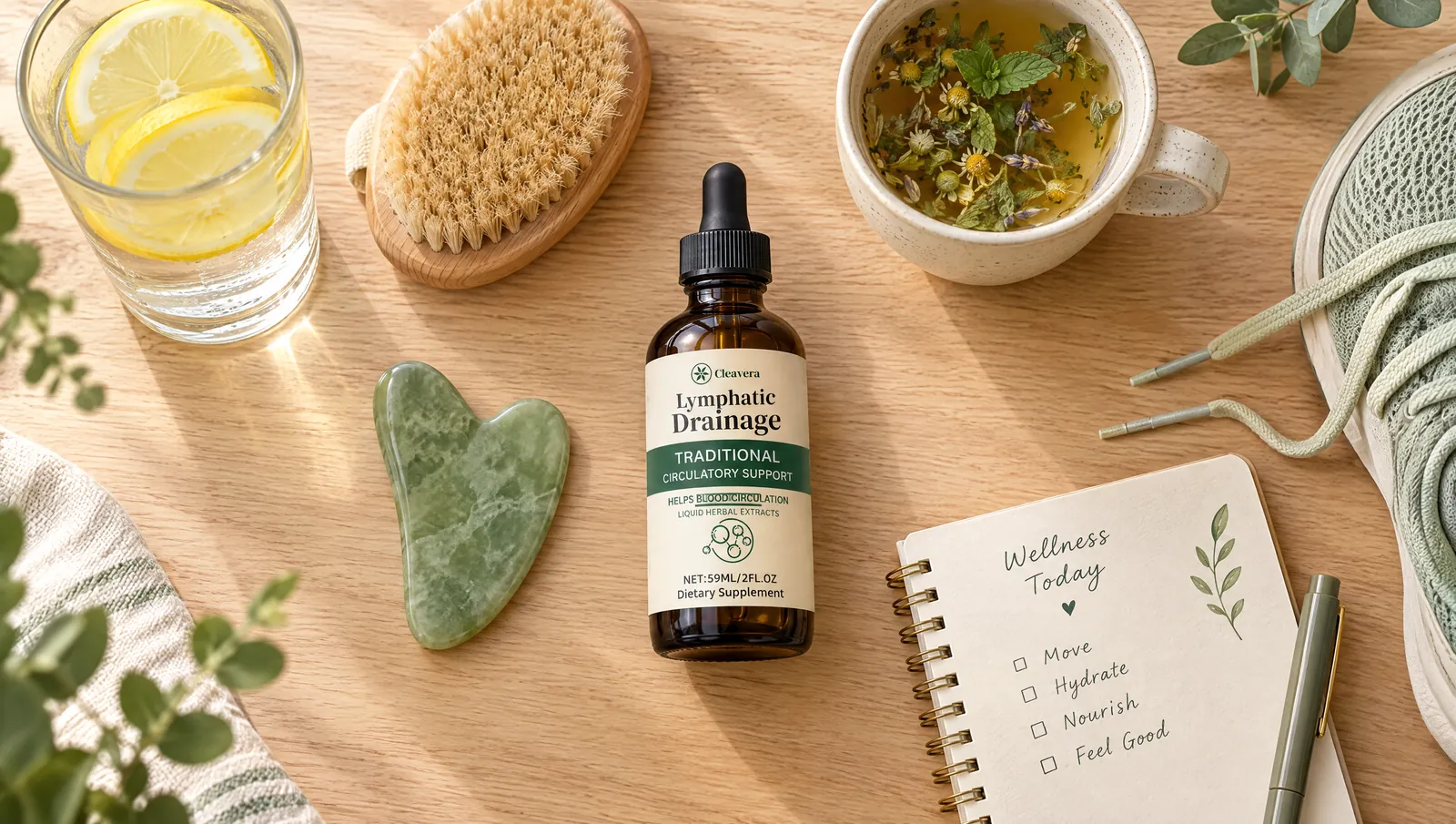
Gua sha has traveled from traditional Chinese medicine clinics to bathroom shelves and video feeds. The polished stones are cool to the touch and oddly satisfying to use, but most of the big claims around them haven’t been tested. This guide covers choosing and holding a tool, the strokes, how often to use it, cleaning, the evidence and who should skip it. If you’d rather use your hands, our facial lymphatic drainage massage guide follows the same map without a tool.
What is gua sha?
Gua sha is a technique from traditional Chinese medicine that uses a smooth-edged tool to stroke or scrape the skin. Tim Sobo, a licensed acupuncturist at Cleveland Clinic, describes it as “a tool-assisted type of massage.”
The name loosely translates to scraping, rubbing or pushing, and it’s also called coining or spooning. In traditional Chinese medicine, it’s said to balance the flow of qi, or energy, a framework Western medicine doesn’t share.
How is facial gua sha different from traditional gua sha?
Facial gua sha is a gentle, at-home ritual that should leave skin faintly pink at most. Traditional gua sha is a firmer technique for the back, shoulders and limbs, usually done by a trained practitioner, and it’s meant to raise red marks called sha.
Cleveland Clinic explains that sha are petechiae, tiny spots of bleeding under the skin from broken capillaries. A 2021 review in the Journal of Family Medicine and Primary Care notes that they clear within two to five days. On your face, they mean you’ve pressed too hard.
| What differs | Facial gua sha | Traditional (body) gua sha |
|---|---|---|
| Where it’s done | Face and neck | Back, neck, shoulders, arms and legs |
| Pressure | Very light | Moderate to firm, built up gradually |
| Marks | None expected; skin may turn faintly pink | Red to purple sha marks are expected |
| Who usually does it | You, at home | A trained acupuncturist or massage therapist |
| Usual aim | A relaxing skin care ritual | Easing tight, sore muscles |
Cleveland Clinic says facial gua sha is generally fine to try at home with light pressure, but recommends a trained provider for your body.
Which gua sha tool should you choose?
Choose a tool with smooth, polished edges that fits comfortably in your hand. The material matters far less than the shape and finish.
- Material. Jade and rose quartz are classics, and stainless steel is sturdy and easy to clean. No material has been shown to work better; Cleveland Clinic’s acupuncturist says even a small wooden spoon works.
- Shape. A long curved edge suits cheeks and forehead, and a notched edge fits the jaw.
- Finish. Run a fingertip along every edge. It should feel completely smooth, with no chips or cracks.
How to use gua sha on your face, step by step
A session takes five to eight minutes. Work one side at a time, and lift the stone at the end of each stroke rather than scraping back and forth. Cleveland Clinic advises moving in one direction, in smooth, straight lines, since rubbing back and forth can stretch and irritate the skin.
- Clean your tool and your skin. Wash the stone and your hands with mild soap and water, then cleanse your face and pat dry.
- Apply facial oil. Smooth a few drops of facial oil or a slippery serum over your face and neck. Add a drop more whenever the stone starts to drag.
- Hold the stone almost flat. Rest the long edge against your skin, tilted only slightly away from your face, so most of the edge touches your skin.
- Start down the neck. Glide from just below each ear down the side of your neck toward your collarbone, 3 to 5 times per side, keeping off the front of your throat.
- Follow the jawline. With the notched edge, glide from the center of your chin along your jaw to just below your ear, 3 to 5 times per side.
- Sweep the cheeks. Using the long edge, glide from beside your nose outward across your cheek toward your ear, 3 to 5 times per side.
- Go gently under the eyes. With the smallest curve and almost no pressure, glide from the inner corner along the bone toward your temple, 2 or 3 times per side. Avoid your eyelids.
- Smooth the forehead. Glide from the center of your brow outward toward your temple, and from your brow up toward your hairline, 3 to 5 times per side.
- Finish down the neck. End with a few slow strokes from in front of your ears down your neck toward your collarbones. Then wash and dry your tool.
How firm is too firm? The stone should feel like a cool glide, never a scrape. Faint pinkness that fades within minutes is fine; lingering redness, tiny red dots or bruises mean you pressed too hard. Cleveland Clinic’s acupuncturist also warns against pressing into swollen areas, which can burst small capillaries and bruise the face.
How often should you use gua sha on your face?
There’s no proven ideal schedule. A few minutes, three to five times a week, is a comfortable start, and daily use suits many people if their skin stays calm. For reference, women in a 2025 trial in the Journal of Cosmetic Dermatology used a gua sha tool for 10 minutes, five times a week. If you notice lasting redness, sensitivity, new breakouts or small broken blood vessels, cut back and lighten your touch.
What does the research say about gua sha?
Gua sha briefly increases blood flow in the skin it touches. Beyond that, the evidence is thin, and almost none of it looks at the gentle facial version.
- Blood flow. In a 2007 pilot study in Explore, 11 healthy adults had one session of traditional gua sha on the back. Surface blood flow rose about fourfold for the first 7.5 minutes and stayed significantly higher for the full 25 minutes measured.
- Muscle aches. Cleveland Clinic points to a 2010 review that found too little evidence to show gua sha relieves pain, though it didn’t rule it out.
- Facial skin. The 2025 trial compared a gua sha tool with a facial roller in 33 women aged 20 to 50. After eight weeks, the gua sha group had lower stiffness readings in a jaw muscle and the roller group had higher skin elasticity readings, and both showed small shifts in 3D face-scan measurements. With no untreated comparison group and no follow-up, it can’t show the tools caused those changes or that they last.
- Lymph. We couldn’t find any study that measured lymph flow during facial gua sha. Cleveland Clinic notes that popular claims about facial gua sha and puffiness haven’t been studied.
What do people notice? Most describe a cool, soothing glide and skin that looks a little rosier for a while, which fits the blood-flow research. Think of it as a pleasant ritual, not a tool that reshapes your face. Our lymphatic system myths fact-check covers more online claims.
Who should skip gua sha or ask first?
Skip gua sha on broken, irritated or flaring skin, and ask first if you take blood thinners, bruise easily or have a skin condition.
- Blood thinners or easy bruising. Cleveland Clinic lists blood thinners such as aspirin, warfarin (Coumadin) and apixaban among the reasons gua sha may not be a good fit, since it can cause bruising. The same goes for a bleeding disorder.
- Skin conditions. Cleveland Clinic also flags eczema and psoriasis. The American Academy of Dermatology (AAD) advises people with rosacea to avoid rubbing, scrubbing or massaging their skin.
- Acne. The AAD notes that scrubbing with tools can irritate acne-prone skin and that touching your face throughout the day can cause acne to flare. Work around breakouts.
- Injectables and procedures. After botulinum toxin injections, the AAD says not to rub or massage the injected areas. After fillers, lasers, peels or surgery, wait for your provider’s go-ahead.
- Other reasons to ask first. Cleveland Clinic also mentions circulation problems, diabetes and pregnancy.
Skip it, or ask your clinician first, if you have an active infection or fever, broken, sunburned or irritated skin, known or suspected blood clots, a heart or kidney condition, a serious illness under active medical care, or recent surgery. Stop if it hurts or bruises.
See a doctor about any new swelling, especially on one side of your face or neck, or swelling that comes with pain, redness or warmth. Get emergency care for facial swelling with hives or trouble breathing.
How do you clean a gua sha stone?
Wash your gua sha after every use with warm water and mild soap, then rinse and dry it completely before you put it away.
- Disinfect now and then. Cleveland Clinic’s acupuncturist says boiling water or a diluted bleach solution can be used. Check the maker’s care instructions first, since some stones can crack with sudden heat.
- Check the edges. Stop using a tool that has chipped or cracked, as Cleveland Clinic advises. Store it in a pouch, away from the edge of the sink.
- Keep it personal. Don’t share your tool, just as you wouldn’t share a washcloth.
Where does gua sha fit in your routine?
Gua sha fits neatly after cleansing, morning or evening. Our gentle routine for a puffy morning face pairs a short gua sha sequence with water, cool compresses and movement. For your body, skip home scraping and try dry brushing instead.
Some people also like a daily herbal ritual. Cleavera Lymphatic Drainage Drops combine cleavers, red clover, stillingia and prickly ash, four herbs traditionally used to support healthy lymphatic flow.* See how the drops work, and check who should skip lymphatic drops before you start.
Frequently asked questions
Should you gua sha upward or downward?
Work from the center of your face outward, then finish with strokes down the sides of your neck toward your collarbones. Cleveland Clinic advises moving in one direction, outward from the middle of your face. Some people like upward strokes on the cheeks and forehead; there’s no evidence one direction is better.
Can you use gua sha without oil?
It’s best not to. Without slip, the stone drags and tugs at your skin, which can irritate it. A few drops of facial oil or a slippery serum are enough. If your skin is acne-prone, choose a lightweight, non-comedogenic product, and rinse your face afterward if it feels heavy.
Can you do gua sha on your body at home?
Traditional body gua sha uses firmer pressure and is meant to leave marks, so Cleveland Clinic recommends seeing a trained provider, such as a licensed acupuncturist, for your body. At home, stick to light facial gua sha. Tell any practitioner about your health conditions and medications.
Why did gua sha leave red marks on my face?
Red dots or patches usually mean the pressure was too firm or you went over one spot too often. They’re tiny spots of bleeding under the skin and typically fade within a few days. Next time, use more oil, lighter pressure and fewer strokes. See a doctor if you bruise easily without pressure.
Sources
- Cleveland Clinic. “Gua Sha: What It Is and How To Do It.” health.clevelandclinic.org/why-gua-sha-might-be-good-for-you
- Explore (Nielsen A, et al.). “The effect of Gua Sha treatment on the microcirculation of surface tissue: a pilot study in healthy subjects.” 2007. pubmed.ncbi.nlm.nih.gov/17905355
- Journal of Family Medicine and Primary Care (Chu ECP, et al.). “Exploring scraping therapy: Contemporary views on an ancient healing – A review.” 2021. pmc.ncbi.nlm.nih.gov/articles/PMC8483130
- Journal of Cosmetic Dermatology (Ahn S-h, et al.). “Comparative Effects of Facial Roller and Gua Sha Massage on Facial Contour, Muscle Tone, and Skin Elasticity: Randomized Controlled Trial.” 2025. pmc.ncbi.nlm.nih.gov/articles/PMC12121324
- American Academy of Dermatology. “Acne: Tips for managing.” aad.org/public/diseases/acne/skin-care/tips
- American Academy of Dermatology. “7 rosacea skin care tips dermatologists recommend.” aad.org/public/diseases/rosacea/triggers/tips
- American Academy of Dermatology. “Botulinum toxin therapy: FAQs.” aad.org/public/cosmetic/wrinkles/botulinum-toxin-faqs
Like our guides? Add Cleavera as a preferred source on Google and our articles can show up more often for you in Google’s Top Stories and AI answers.