How to Dry Brush: A Step-by-Step Guide (and What It Can’t Do)
From choosing a brush to the right direction and pressure, here’s how to dry brush your body well, plus an honest look at what dry brushing can and can’t do.

Dry brushing is an easy ritual to love. It takes a few minutes, costs little more than the brush, and leaves your skin feeling smooth and awake before a shower. It also attracts big promises online, and many of them don’t hold up.
This guide covers how to dry brush step by step, which direction to brush, how often to do it and how to choose a brush. It also covers what dry brushing really does, and when to leave the brush on the shelf.
What is dry brushing?
Dry brushing is sweeping a dry, firm-bristled brush over dry skin, usually right before a shower. It’s a form of mechanical exfoliation, which the American Academy of Dermatology (AAD) describes as using a tool, such as a brush, pad or sponge, to physically remove dead skin cells.
Your skin sheds those cells on its own. According to Cleveland Clinic, new skin cells form at the base of the epidermis and reach the outermost layer, the stratum corneum, after about a month. There they form a tough protective layer before eventually shedding. Dry brushing helps loosen dead cells that are ready to go, which is why your skin can feel smoother and look brighter for a while afterward.
How do you choose a dry brush?
Choose a brush with firm but flexible natural bristles and, ideally, a long handle for your back. Cleveland Clinic dermatologist Shilpi Khetarpal, MD, notes that some bristles are stiffer than others, and the right one depends on how sensitive your skin is.
- Bristles: Firm enough to feel brisk, soft enough not to scratch. Test the brush on the inside of your wrist. If it stings there, it’s too stiff for you.
- Handle: A long handle makes your back and the backs of your legs easy to reach. A palm-sized brush gives more control on arms and legs.
- Sensitive skin: Start with a soft brush, or use a plain, dry washcloth instead, as Cleveland Clinic suggests.
- Your face: A body brush isn’t made for facial skin, which is more delicate and needs gentler methods.
How to dry brush, step by step
A full-body session takes 3 to 5 minutes of brushing. Stand in your empty tub or shower so loosened flakes rinse straight away afterward.
- Check your skin. Look for cuts, scrapes, sunburn, rashes, irritated patches, moles, warts or raised bumps, and plan to brush around them.
- Start dry. Make sure both your skin and the brush are completely dry.
- Begin at your feet. Starting at your soles and ankles, sweep upward toward your knees in long, light strokes, then brush from your knees up toward your hips. Two or three overlapping strokes per area is enough.
- Move to your hands and arms. Brush from your palms and the backs of your hands up toward your elbows, then from your elbows toward your shoulders.
- Use gentle circles on your torso. Brush your belly, sides and back in small, light circles. Ease off on your belly, chest and neck, where skin is more sensitive.
- Skip your face. Leave your face out entirely, and use a gentle product made for facial skin if you want to exfoliate there.
- Shower. Rinse off the loosened skin with lukewarm water. Very hot water can strip away the oils that keep skin healthy.
- Moisturize right away. Pat your skin dry and apply a lotion or body oil while your skin is still slightly damp.
Going over the same spot again and again won’t make dry brushing work better. Cleveland Clinic’s dermatologist warns that lingering on one area can cause irritation or even bleeding.
Which direction should you dry brush?
Brush toward your heart: upward from your feet and hands, with gentle circles on your torso. That’s the traditional direction, and both Cleveland Clinic’s dermatologist and Cedars-Sinai describe working from the extremities toward the trunk.
The idea is to follow the general path lymph takes, from your limbs toward your upper chest, where it rejoins your bloodstream. There’s no good evidence that brush direction changes lymph flow, so don’t worry about getting every stroke perfect. Upward strokes are simply a comfortable, systematic way to cover your whole body without missing a patch.
How often should you dry brush?
Two or three times a week is a sensible starting point for most people. Cleveland Clinic’s dermatologist suggests dry brushing up to once a day, while Cleveland Clinic’s broader exfoliation guidance says two or three times a week is usually enough for body skin.
The AAD’s rule of thumb is that the more aggressive the exfoliation, the less often you need it. Let your skin set the pace:
- About right: your skin feels smooth and comfortable, with no lingering redness.
- Too much: redness that lasts, stinging in the shower, tightness, flaking or small scratches. Brush less often, lighten up or switch to a softer brush.
Does dry brushing help your lymphatic system?
Nobody knows for sure, because it hasn’t been well studied, so think of dry brushing as an exfoliating ritual first. Many lymph vessels sit just beneath the skin, which is why the idea appeals, and some clinicians, including the dermatologist interviewed by Cleveland Clinic, say dry brushing may promote circulation and lymph flow. We couldn’t find controlled studies that actually measured it.
Dry brushing also isn’t the same as clinical manual lymphatic drainage, a specialized therapy performed by certified therapists using slow, gentle skin stretches rather than bristles. If lymph flow is your main interest, the strongest everyday levers are free. Cleveland Clinic explains that the squeezing of nearby muscles and the pulsing of nearby arteries help push lymph through its vessels, so walking, stretching and deep breathing all play a part.
One more popular claim deserves a straight answer: there’s no proof that dry brushing changes cellulite. Cleveland Clinic’s dermatologist says any visible difference is likely temporary plumping of the skin from increased blood flow.
For a hands-on lymph routine, try our guide to lymphatic drainage massage at home, or see how the options stack up in lymphatic drops vs. massage vs. dry brushing.
Who should not dry brush?
Don’t dry brush skin that’s broken, irritated or infected, and ask a dermatologist first if you have a skin condition or very sensitive skin. In particular, skip or go gentle on:
- cuts, scrapes, sores, sunburn or other burns
- rashes, redness, infection, or a flare of a skin condition such as eczema or psoriasis
- moles, warts and raised bumps (brush around them)
- skin made more sensitive by prescription retinoids or products with retinol or benzoyl peroxide, which the AAD notes can make skin more sensitive or prone to peeling
- darker skin that tends to develop dark spots after irritation, since the AAD notes that aggressive exfoliation can increase pigmentation
Skip it, or ask your clinician first, if you have an active infection or fever, broken or irritated skin, known or suspected blood clots, a heart or kidney condition, a serious illness under active medical care, or recent surgery (stay well clear of any incision). Stop brushing if your skin becomes red, swollen or sore.
See a doctor about any new swelling, especially in one arm or leg, or swelling that comes with pain, redness or warmth. That needs a proper check, not a brush.
How do you clean a dry brush?
Tap out loosened skin after each session and wash the bristles every week or two. A simple routine:
- Swish the bristles in warm water with a little mild soap or shampoo, keeping a wooden handle as dry as you can.
- Rinse well and shake out the excess water.
- Dry the brush bristles-down somewhere airy, not in a steamy shower.
- Keep your brush to yourself, and replace it when the bristles splay, shed or start to smell.
Where does dry brushing fit in a daily routine?
Dry brushing fits best as a short morning ritual alongside habits that support your lymphatic system every day: a glass of water when you wake, a walk, and a few slow belly breaths. Our 10 daily habits for healthy lymph flow shows how to put those together, and our guide to how lymphatic drainage drops work explains the lymphatic system in plain language.
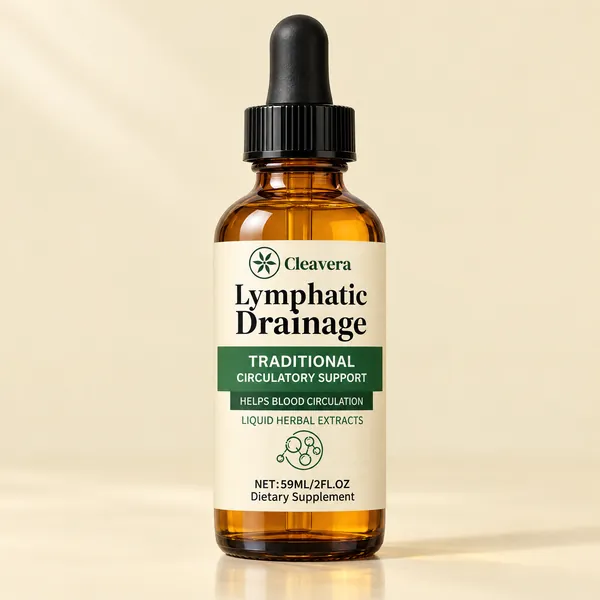
Some people also add a daily herbal ritual. Cleavera Lymphatic Drainage Drops combine cleavers, red clover, stillingia and prickly ash, four herbs traditionally used to support healthy lymphatic flow.* Stir 1 mL into your morning water and again later in the day.
Frequently asked questions
Should you dry brush before or after a shower?
Before. Dry brushing is done on dry skin, and showering afterward rinses away the skin cells you’ve loosened. Cleveland Clinic recommends brushing just before a shower and applying lotion afterward to put moisture back into your skin. Make sure your skin and the brush are both completely dry when you start.
Can you dry brush your face?
It’s best not to use a body dry brush on your face. Cleveland Clinic’s dermatologist advises against it because facial skin is more sensitive than skin elsewhere on your body. If you want to exfoliate your face, use a gentle product made for facial skin, and Cleveland Clinic suggests doing so only once or twice a week.
How long should a dry brushing session take?
About 3 to 5 minutes for your whole body. Two or three overlapping strokes per area is plenty, and going over the same spot repeatedly can irritate your skin. If you’re short on time, focus on rough areas such as your elbows, knees, upper arms and the backs of your legs.
Is dry brushing safe for sensitive skin?
It can be, with care. Start with a soft brush or a dry washcloth, use very light pressure, and brush once or twice a week. Stop right away if you notice redness, swelling or stinging. If you have eczema, psoriasis or another skin condition, ask your dermatologist before you start.
Can you dry brush your stomach and chest?
Yes, with a lighter touch. Use small, gentle circles on your belly and sides and slow, light strokes across your chest, avoiding the nipples. Cleveland Clinic’s dermatologist suggests easing off on the abdomen, breasts and neck because the skin there is more sensitive. Stop if anything feels tender or looks red.
Sources
- Cleveland Clinic. “The Truth About Dry Brushing and What It Does for You.” health.clevelandclinic.org/the-truth-about-dry-brushing…
- Cleveland Clinic. “How To Exfoliate the Right Way.” health.clevelandclinic.org/how-to-exfoliate
- American Academy of Dermatology. “How to safely exfoliate at home.” aad.org/media/news-releases/evaluate-before-you-exfoliate
- Cleveland Clinic. “Epidermis.” my.clevelandclinic.org/health/body/21901-epidermis
- Cleveland Clinic. “Lymphatic System.” my.clevelandclinic.org/health/body/21199-lymphatic-system
- Cedars-Sinai. “FAQs About Lymphatic Drainage Massage.” cedars-sinai.org/blog/lymphatic-drainage-massage-faqs