Glycerite vs. Tincture: Why We Chose an Alcohol-Free Extract
Both are liquid herbal extracts, but the liquid they’re made with changes the taste, the experience and who they suit. Here’s an honest comparison, and why Cleavera is made without alcohol.
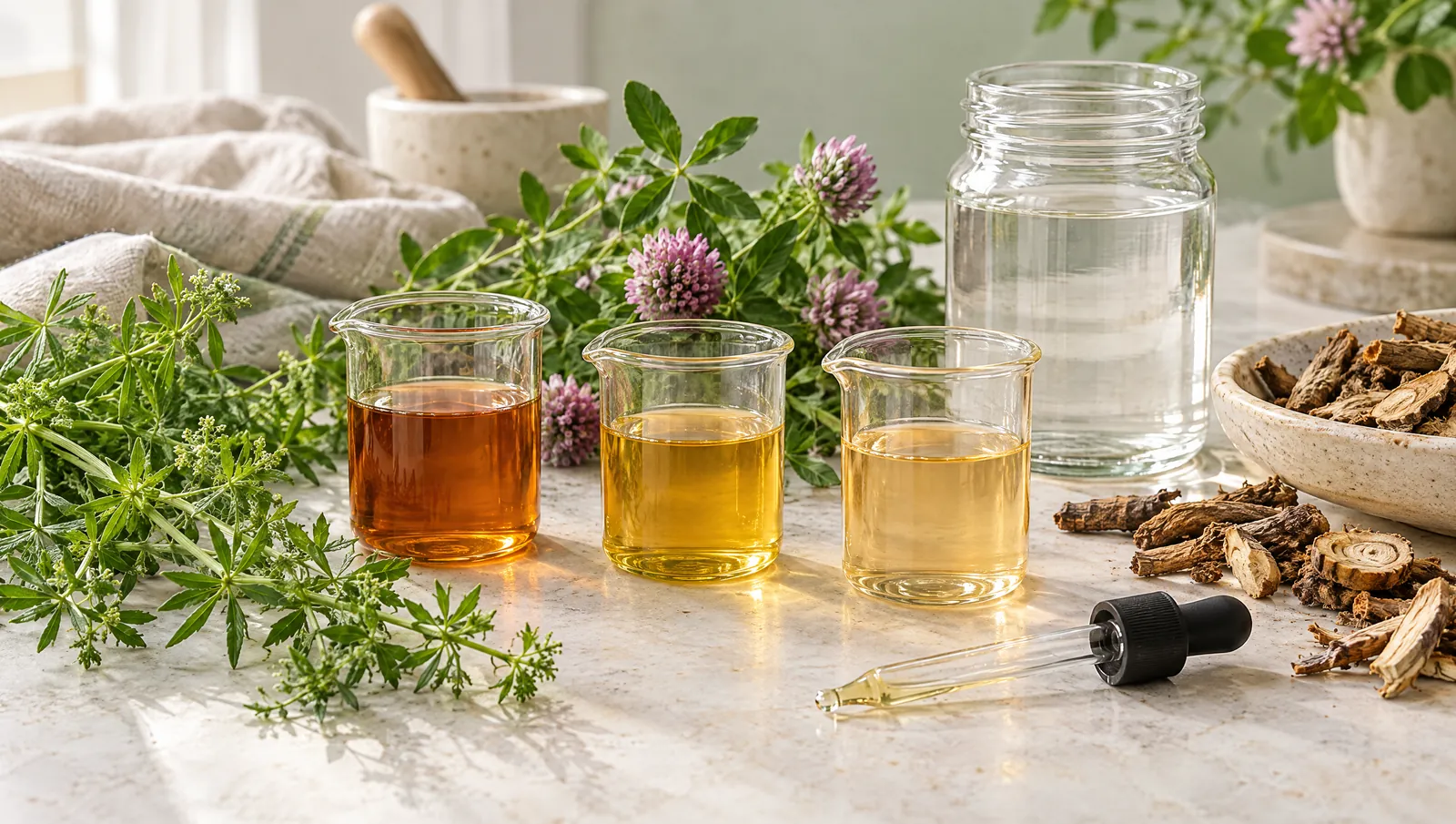
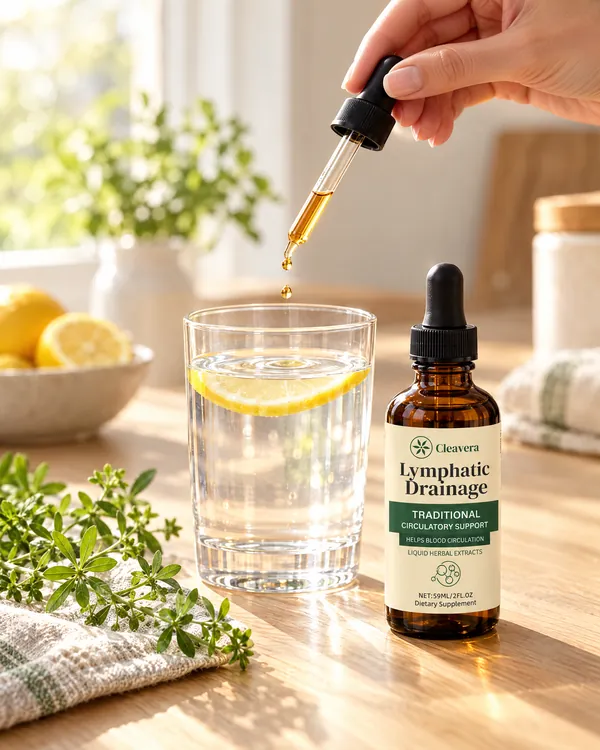
Walk down the supplement aisle and you’ll see rows of small amber dropper bottles. Most of them are tinctures, made with alcohol. A smaller number are glycerites, made with vegetable glycerin instead. They look almost identical on the shelf, but they’re quite different once you open them.
When we formulated Cleavera, choosing between the two was one of our first decisions. This guide explains glycerite vs. tincture in plain language: how each is made, the trade-offs, and why we landed on an alcohol-free extract.
What is a tincture?
A tincture is a concentrated liquid extract made by soaking plant material in a mix of alcohol and water. The NIH’s Office of Dietary Supplements describes tinctures as a way of concentrating and preserving a botanical. Herbalists call the soaking liquid the menstruum. Over days or weeks it draws compounds out of the plant, and the liquid is then pressed and strained.
Tinctures have been a workhorse of Western herbal practice for centuries, and for good reason. Alcohol pulls out a wide range of plant compounds and keeps the finished extract stable for a long time. The trade-off is that a tincture can contain a substantial percentage of alcohol, which gives it a sharp, warming bite.
What is a glycerite?
A glycerite is a liquid herbal extract made with vegetable glycerin, usually combined with water, instead of alcohol. Vegetable glycerin, also called glycerol, is a clear, thick, naturally sweet liquid typically derived from plant oils. US food regulations list glycerin as generally recognized as safe when used in foods according to good manufacturing practice.
Chemically, glycerin belongs to a family of compounds called polyols, which are sometimes described as sugar alcohols. Despite that name, it isn’t ethanol, the alcohol found in beer, wine and tinctures, and it isn’t intoxicating. When people search for an “alcohol-free tincture,” a glycerite is usually what they’re looking for.
How extraction differs
The liquid decides which parts of a plant end up in the bottle. Every plant contains many different compounds, and each dissolves differently depending on what surrounds it.
- Alcohol and water together dissolve a broad spectrum of compounds, including resins and other constituents that don’t dissolve well in water alone.
- Glycerin and water are gentler solvents. They work well for many water-soluble compounds but are less effective for resinous or strongly oil-soluble ones.
That doesn’t make one universally better. Herbalists choose a solvent based on the plant, the part being used and the person who will take the finished extract. The plants in Cleavera have been prepared in many forms over the years, including teas, syrups and tinctures. A glycerin-and-water base lets us offer them in a form that’s easy to take every day.
A note on strength
Because glycerin is a milder solvent, glycerites and tinctures aren’t interchangeable drop for drop. That’s why it’s worth reading the Supplement Facts panel instead of comparing bottles by size, and our label-reading guide to choosing lymphatic drops shows what to look for. Each 1 mL serving of Cleavera contains a 300 mg proprietary blend of four botanical extracts. The only other ingredients are vegetable glycerin and water.
What does a glycerite taste like?
A glycerite tastes naturally sweet and slightly syrupy, with no alcohol burn, while a tincture tastes sharply of alcohol. This is where most people notice the difference first.
- Tinctures taste strongly of alcohol, with a burn at the back of the throat. Bitter or pungent herbs can be hard to take straight, so many people dilute them.
- Glycerites are naturally sweet and slightly syrupy, with no alcohol burn. Herbs still taste like herbs. Cleavera is earthy, with a gentle warming note from prickly ash, but the overall experience is much milder.
Who prefers alcohol-free extracts?
A glycerite is a natural fit if you:
- avoid alcohol for health, personal or religious reasons
- are in recovery, or would rather not keep alcohol-based products at home
- take a medication that shouldn’t be combined with alcohol (check the label or ask your pharmacist)
- find the taste of alcohol unpleasant or are sensitive to its burn
- want something that blends easily into water, tea or juice as part of a daily ritual
You may have heard that adding a tincture to hot water lets the alcohol evaporate. Some of it may, but this doesn’t reliably remove all of it. USDA cooking data suggest that alcohol stirred into a hot liquid keeps about 85 percent of its alcohol. If avoiding alcohol matters to you, choosing alcohol-free lymphatic drops or other glycerin-based extracts is simpler.
How long does a glycerite last?
A glycerite generally keeps for less time than an alcohol-based tincture, so go by the date printed on the label and store it cool, dark and tightly capped. Alcohol is one of the most effective preservatives in herbal making, which is why tinctures are known for lasting years. Glycerin also helps preserve an extract, just not as strongly. To keep any liquid extract at its best:
- Store it in a cool, dark place away from heat and direct sun. Amber glass helps, but a cupboard beats a sunny windowsill.
- Close the cap tightly after each use.
- Keep the dropper clean by not touching it to your mouth, cup or fingers.
- Check the date on the bottle and follow any storage directions on the label.
- If the color, smell or texture changes noticeably, don’t use it.
Glycerite vs. tincture at a glance
| Glycerite (alcohol-free) | Tincture (alcohol-based) | |
|---|---|---|
| Solvent | Vegetable glycerin and water | Alcohol (ethanol) and water |
| Taste | Mild, naturally sweet | Sharp, with an alcohol burn |
| Alcohol | None | Varies, often substantial |
| Extraction | Gentler; well suited to many water-soluble compounds | Broader; includes resins and less water-soluble compounds |
| Shelf life | Shorter; check the date | Typically several years |
| Best for | People avoiding alcohol; mixing into daily drinks | People comfortable with alcohol; long storage |
| Watch-outs | Store carefully; less suited to resinous herbs | Not an option for anyone avoiding alcohol |
Why we chose an alcohol-free extract
For Cleavera, three things mattered most.
- A habit you can keep. The directions call for 1 mL twice a day. A mild, sweet extract that disappears into a glass of water is easier to stick with than a sharp tincture.
- Room for more routines. Leaving out alcohol makes the formula a fit for many people who avoid it, without changing the four herbs at its heart.
- A short, readable label. Four named herbs, vegetable glycerin and water. No alcohol, artificial colors, artificial flavors or added sugar. It’s also vegan, gluten-free, non-GMO and third-party tested.
Those four botanicals, cleavers, red clover, stillingia and prickly ash, are traditionally used to support healthy lymphatic flow and circulation.* You can read about each in our ingredient guide, or explore their story in The Herbal Tradition Behind Cleavers, Red Clover, Stillingia & Prickly Ash.
How to take a glycerite
- Measure your serving. For Cleavera, that’s 1 mL, about ¼ teaspoon, using the dropper.
- Add it to a drink such as water, tea, juice or a smoothie, or take it straight.
- Repeat later in the day. Cleavera’s directions are 1 mL twice daily.
- Be consistent and stay hydrated. Herbal formulas are designed for steady daily use. Our guide to how lymphatic drainage drops work covers the details.
For timing, mixing ideas and what to do if you miss a serving, see how to take lymphatic drainage drops.
A daily herbal fits best alongside the basics. Our 10 daily habits for healthy lymph flow are a good place to start, and the product page has the full Supplement Facts.
Alcohol-free doesn’t mean right for everyone. Cleavera is for adults. Talk to your healthcare professional before use if you’re pregnant or nursing, take medication (including blood thinners or hormone therapy), have a hormone-sensitive or bleeding condition, or have surgery scheduled. Stop use if you experience nausea or digestive upset. Our guide to side effects and who should skip lymphatic drops goes into more detail.
Frequently asked questions
What is the difference between a glycerite and a tincture?
Both are liquid herbal extracts. A tincture is made with alcohol and water, while a glycerite is made with vegetable glycerin and water. Tinctures extract a broader range of compounds and keep for longer; glycerites are alcohol-free, milder and naturally sweet.
Is an alcohol-free tincture as strong as an alcohol tincture?
They aren’t directly interchangeable. Alcohol extracts some compounds, such as resins, more efficiently, while glycerin works well for many water-soluble compounds. Which suits you depends on the herb and on you. If avoiding alcohol matters to you, a glycerite is the practical choice.
Does vegetable glycerin contain alcohol?
No. Vegetable glycerin is a polyol, a type of compound sometimes called a sugar alcohol, but it isn’t ethanol and it isn’t intoxicating. Cleavera contains no ethanol.
How should I store alcohol-free lymphatic drops?
Keep the bottle tightly capped in a cool, dark place, avoid touching the dropper to your mouth, and use it before the date printed on the label. Glycerites typically have a shorter shelf life than alcohol tinctures.
Sources
- NIH Office of Dietary Supplements. “Botanical Dietary Supplements: Background Information.” ods.od.nih.gov/factsheets/BotanicalBackground-Consumer
- Electronic Code of Federal Regulations. “21 CFR 182.1320 Glycerin.” ecfr.gov/current/title-21/…/section-182.1320
- USDA Agricultural Research Service. “USDA Table of Nutrient Retention Factors, Release 6.” ars.usda.gov/ARSUserFiles/80400525/Data/retn/retn06.pdf
- National Institute on Alcohol Abuse and Alcoholism. “Harmful Interactions: Mixing Alcohol with Medicines.” niaaa.nih.gov/publications/brochures-and-fact-sheets/harmful-interactions…
- U.S. Food and Drug Administration. “FDA 101: Dietary Supplements.” fda.gov/consumers/consumer-updates/fda-101-dietary-supplements