Lymphatic Drainage Massage at Home: A Gentle Step-by-Step Routine
A calm, 10-minute routine you can do with nothing but your hands, plus how much pressure to use, what it should feel like and when to skip it.
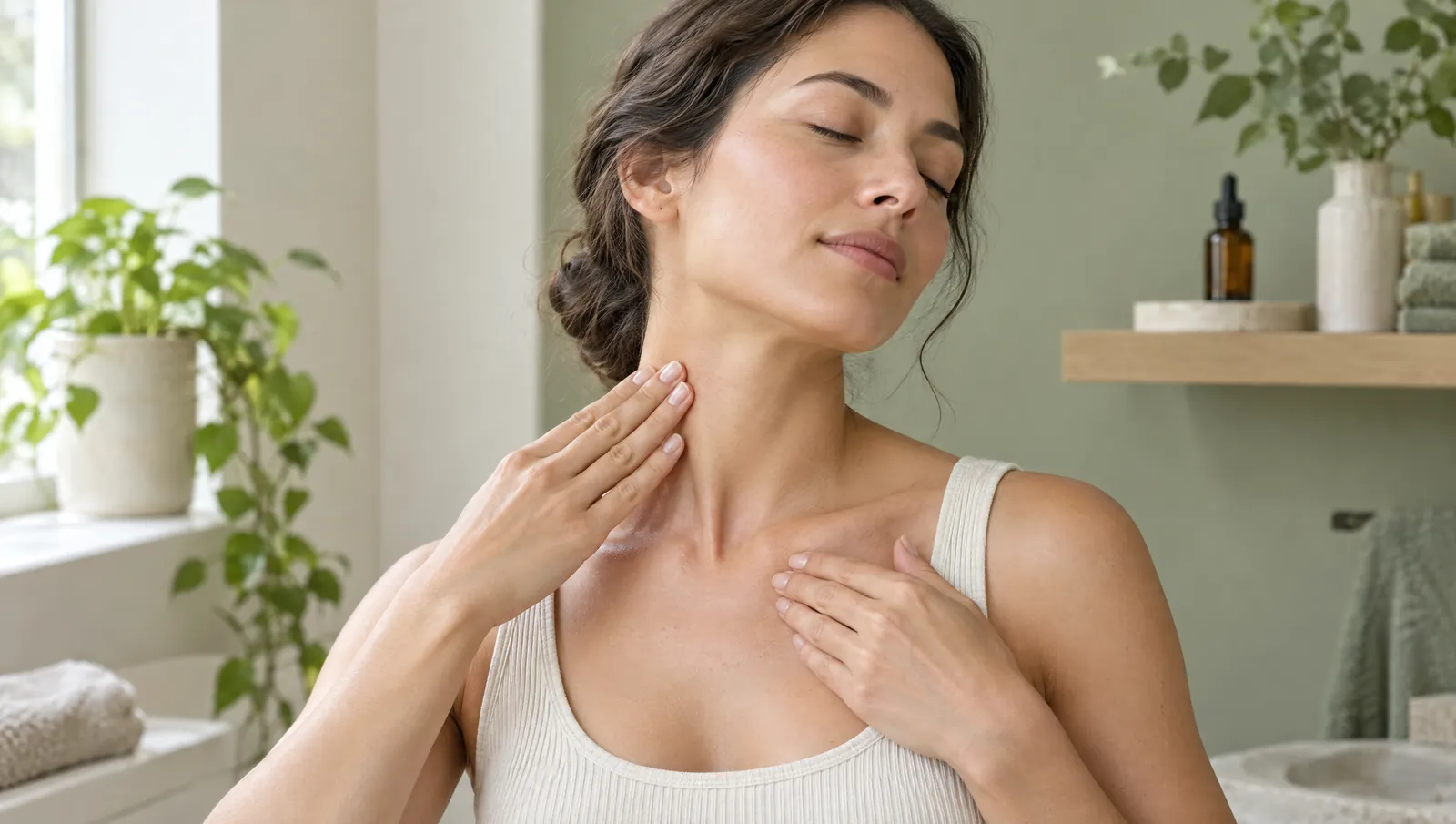
Lymphatic drainage massage has gone from a quiet clinical technique to a fixture of wellness feeds. Spa versions can be lovely, but you don’t need an appointment to try the basic idea. A simple at-home routine takes about 10 minutes, uses only your hands, and makes a calming end to the day.
This guide walks you through a gentle sequence for the neck, chest and arms, step by step. It draws on hospital patient-education guides and advice from Cleveland Clinic and Cedars-Sinai. It’s general wellness information, not medical advice. If you have a diagnosed condition, your care team’s instructions come first.
What is lymphatic drainage massage?
Lymphatic drainage massage is a very light, rhythmic massage that gently stretches the skin in the direction lymph naturally flows, toward clusters of lymph nodes. It’s far softer than a regular massage because it targets lymph vessels that lie just beneath the skin, not the muscles below.
A little anatomy explains the technique. According to Cleveland Clinic, you have about 600 lymph nodes, and your lymphatic system returns roughly 3 liters of fluid a day from your tissues to your blood. That fluid finishes its journey in two ducts in the upper chest, which empty into the subclavian veins just beneath your collarbones. That’s why lymphatic routines start at the base of the neck: you begin near the exit and work outward.
There are two very different versions. Clinical manual lymphatic drainage (MLD) is a specialized therapy performed by certified therapists, usually as part of medical care for specific lymphatic conditions. At-home lymphatic self-massage borrows MLD’s gentle style for everyday self-care. This guide is about the second.
Can you do lymphatic drainage massage on yourself?
Yes. A simple self-massage is easy to learn and generally low-risk for healthy adults, as long as you keep the pressure light and skip it when it isn’t a good idea. Cleveland Clinic notes that you can do lymphatic massage on yourself in some cases, but advises asking your healthcare provider how to do it properly if you have a medical condition.
If you need lymphatic care for medical reasons, UCLA Health recommends starting with a certified therapist, physical therapist or massage therapist trained in MLD. They can teach you a routine tailored to your body.
How much pressure should you use for lymphatic massage?
Use just enough pressure to gently stretch the skin, then release and let it settle back. A simple rule of thumb: if you can feel your muscles under your skin, you’re pressing too hard.
- Use flat fingers or your palm, not your fingertips. More contact, less poking.
- Go slowly. Think of an unhurried rhythm, about one stretch every second or two.
- Keep it pain-free. Your skin shouldn’t turn red or feel sore.
- Skip the oil. Cedars-Sinai advises against oils or lotions, because the aim is to move the skin, not glide over it.
How to do lymphatic drainage massage at home, step by step
Set aside about 10 minutes and find somewhere warm to sit or lie down. Cleveland Clinic suggests doing it after a warm shower or bath. Move slowly, and work one side at a time if that feels easier.
- Breathe first. Rest your hands on your belly. Breathe in slowly through your nose so your belly rises, then breathe out through pursed lips. Take five slow breaths, pausing between them so you don’t feel light-headed.
- Start above your collarbones. Place the flats of your index and middle fingers in the soft hollow just above each collarbone. Gently stretch the skin down and inward toward the center of your neck, then release. Repeat 10 times.
- Glide down the sides of your neck. Rest your palms flat on the sides of your neck, just below your ears. Slowly stretch the skin down toward your collarbones, then release. Repeat 10 times.
- Soften the back of your neck. Place your palms on the back of your neck, just below your hairline. Stretch the skin toward your spine and down toward your shoulders, then release. Repeat 10 times.
- Prepare your underarms. Rest one arm on a table or armrest. Cup your other palm in that armpit and gently pump up and inward, then release. Repeat 10 times on each side.
- Sweep your chest toward your underarms. Place a flat hand at the center of your chest and gently stretch the skin toward the opposite armpit. Alternate hands for 10 sweeps in all.
- Work your arms, near to far. Start on your upper arm and stretch the skin up toward your armpit. Then move to your elbow, and finally your forearm, always stroking up toward your shoulder. Repeat 5 to 10 times in each spot, then switch arms.
- Finish where you started. Repeat the collarbone strokes from step 2 another 5 to 10 times. Sit quietly for a minute and have a glass of water.
Short on time? Steps 1 to 3 alone make a soothing three-minute reset. If you’d like to include your face, our gentle morning facial massage routine fits neatly after step 4.
How often should you do lymphatic self-massage?
There’s no proven ideal schedule for healthy adults. Once a day or a few times a week is a reasonable rhythm, and a short routine you repeat matters more than a long session now and then. University Health Network’s guide simply advises doing self-massage regularly and using it as time to relax and breathe.
Evenings work well for many people because the routine is naturally calming. Mornings work too, especially after a warm shower. If you also dry brush, do it at a different time of day so your skin isn’t overworked.
What should lymphatic drainage massage feel like?
It should feel soft, slow and soothing, closer to a gentle stretch than a massage. You won’t feel lymph moving, and nothing should hurt, pinch or leave marks.
Some people feel a little sleepy afterward. Cleveland Clinic notes that lymphatic self-massage can occasionally bring temporary fatigue, headache or nausea, so take it easy for a few minutes and drink some water. If a stroke hurts, or any discomfort lingers, stop.
What are the most common lymphatic massage mistakes?
The most common mistakes are pressing too hard, moving too fast and starting in the wrong place. Watch for these:
- Pressing too hard. Deep pressure works the muscle, not the lymph vessels just under the skin.
- Rushing. Brisk rubbing isn’t the technique. Slow is the point.
- Starting at your hands or feet. Begin at the neck and collarbones, then work outward, always stroking back toward the center.
- Using oil. Slippery skin can’t be gently stretched.
- Massaging trouble spots. Skip skin that’s sore, red, warm, broken or infected.
- Chasing results. Don’t judge the routine by the mirror or the scale. Judge it by whether you feel calmer.
Does lymphatic drainage massage actually work?
It depends on who’s receiving it. Clinical manual lymphatic drainage is a recognized part of medical care for people whose lymphatic systems need help, delivered by certified therapists. For people whose lymphatic systems work normally, the evidence is much thinner.
Cedars-Sinai’s lymphatic massage FAQ says a healthy person is unlikely to benefit much beyond simple relaxation, and UCLA Health notes there’s no substantial scientific evidence behind many popular wellness claims. Relaxation does have some support. A small 2009 randomized trial in 32 healthy men found signs of reduced “fight-or-flight” nervous system activity after MLD compared with simply resting. It’s a modest finding from a small study, but it matches what most people notice: lymphatic self-massage is deeply calming.
How does self-massage fit with other lymph-friendly habits?
Self-massage is one small part of a bigger picture. According to Cleveland Clinic, the squeezing of nearby muscles and the pulsing of nearby arteries are what move lymph day to day, so walking, stretching and deep breathing do the heavy lifting. Our 10 daily habits for healthy lymph flow covers those basics, and our comparison of lymphatic drops, massage and dry brushing shows how the popular options stack up. If brushing appeals to you, here’s how to dry brush safely.
Some people also like a daily herbal ritual. Cleavera Lymphatic Drainage Drops combine cleavers, red clover, stillingia and prickly ash, four herbs traditionally used to support healthy lymphatic flow.* You can read about each plant in our ingredient guide.
Skip it, or ask your clinician first, if:
- you have an active infection or fever
- the skin in the area is broken, irritated or sunburned
- you have known or suspected blood clots
- you have a heart or kidney condition
- you have a serious illness under active medical care
- you’ve had recent surgery, or you’re pregnant
- you have a diagnosed lymphatic condition (work with a certified therapist rather than improvising)
See a doctor about any new swelling, especially in one arm or leg, or swelling that comes with pain, redness or warmth. Those need a proper check, not a massage.
Frequently asked questions
Is it normal to feel tired after lymphatic drainage massage?
Mild tiredness can happen, partly because the routine is so relaxing. Cleveland Clinic notes that some people feel temporary fatigue, headache or nausea afterward. Rest for a few minutes and drink some water. If you feel unwell for more than a short while, or the symptoms are strong, stop the massage and check with your clinician.
Can I do lymphatic drainage massage on my face?
Yes. A facial version uses the same light, skin-stretching strokes, moving from the center of your face outward and then down the sides of your neck. Do the neck and collarbone steps first. Keep the pressure especially gentle around your eyes, and skip any areas with breakouts, rashes or a recent cosmetic procedure.
How is lymphatic drainage massage different from a regular massage?
A regular massage works on your muscles, using firmer pressure and kneading. Lymphatic drainage massage targets lymph vessels just beneath the skin, so it uses very light pressure, slow, rhythmic skin stretches and a set direction of travel toward lymph nodes. It should never feel deep or painful.
Do I need any tools for lymphatic self-massage?
No. Your hands are the best tool, because the flats of your fingers and palms can gently stretch the skin. Rollers and gua sha stones are popular for the face, but they aren’t necessary. Skip oil for body self-massage so your hands can move the skin rather than slide over it.
Is lymphatic self-massage safe during pregnancy?
Check with your prenatal care provider first. Pregnancy brings real changes to circulation and fluid balance, so it’s worth getting a personal go-ahead before starting any lymphatic routine. If you get the all-clear, keep the pressure light, avoid your belly unless your provider says otherwise, and stop if anything feels uncomfortable.
Sources
- Cleveland Clinic. “How To Perform a Lymphatic Drainage Self-Massage.” health.clevelandclinic.org/lymphatic-drainage-self-massage
- Cleveland Clinic. “Lymphatic Drainage Massage.” my.clevelandclinic.org/health/treatments/21768-lymphatic-drainage-massage
- Cleveland Clinic. “Lymphatic System.” my.clevelandclinic.org/health/body/21199-lymphatic-system
- Cedars-Sinai. “FAQs About Lymphatic Drainage Massage.” cedars-sinai.org/blog/lymphatic-drainage-massage-faqs
- UCLA Health. “Lymphatic drainage massage — separating fact from fiction.” uclahealth.org/news/article/lymphatic-drainage-massage-separating-fact-fiction
- International Journal of Neuroscience (Kim, Kwon & Yi, 2009). “Effects of manual lymph drainage on cardiac autonomic tone in healthy subjects.” pubmed.ncbi.nlm.nih.gov/19922342