What to Eat for Healthy Lymph Flow: A Simple Food Guide
No single food moves lymph, whatever the superfood lists say. But your everyday plate shapes the fluid balance your lymphatic system works within. Here’s what the nutrition evidence actually supports.
Search for foods for the lymphatic system and you’ll find long lists of superfoods said to get your lymph moving. The reality is quieter and more useful. Lymph is a watery fluid that your body collects from the spaces around your cells and returns to your blood. What you eat and drink shapes that fluid environment every day.
This guide sticks to established nutrition guidance from the Dietary Guidelines for Americans, the FDA and the NIH, and explains how each piece connects to fluid balance. It’s general healthy-eating information for adults, not a medical diet.
Is there a best food for your lymphatic system?
There isn’t one. We’re not aware of good evidence that any single food, juice or spice moves lymph on its own. What nutrition science does support is an overall eating pattern built on whole foods, plenty of fluids and modest sodium.
The Dietary Guidelines for Americans, 2025–2030 put it simply: prioritize whole, nutrient-dense foods, including protein, dairy, vegetables, fruits and whole grains, and sharply reduce highly processed foods with added sugars and excess sodium. For a 2,000-calorie day, that means about 3 servings of vegetables and 2 of fruit, 2 to 4 servings of whole grains, and protein at every meal.
Those same habits happen to cover the nutrients most involved in fluid balance: water, sodium, potassium, fiber and protein. Keep in mind that lymph relies on movement and breathing far more than on any one meal. Our explainer on how lymph moves covers that side of the story.
How does what you eat affect fluid balance?
Food affects fluid balance in two main ways. It supplies water directly, and it supplies electrolytes, minerals such as sodium and potassium that help control how much water your body holds.
MedlinePlus describes electrolytes as minerals that carry an electric charge when dissolved in body fluids. Among other jobs, they help balance the amount of water in your body, move nutrients into your cells, and support muscle and nerve function. The overall goal is simple: the water you take in should match the water you lose.
Protein plays a quieter part. Lymph starts as fluid that seeps out of tiny blood vessels into your tissues. Albumin, a protein made by your liver, helps hold fluid inside those vessels. In the words of MedlinePlus, albumin “keeps the fluid part of your blood from leaking out of your blood vessels.” Your lymphatic system collects the fluid that does leave and carries it back. Our guide to how much water to drink a day explains that cycle in more detail.
How much sodium should you have a day?
Adults and teens 14 and older should keep sodium under 2,300 mg a day, according to both the FDA and the Dietary Guidelines for Americans. That’s about one teaspoon of table salt, counting every source.
Most of us go well past that. The FDA reports that Americans eat about 3,400 mg of sodium a day on average, and that more than 70 percent comes from packaged and prepared foods rather than the salt shaker. So the most effective change usually isn’t cooking without salt. It’s eating fewer highly processed foods and reading labels on the ones you buy.
- Use the % Daily Value. The FDA’s rule of thumb: 5 percent DV or less of sodium per serving is low, and 20 percent DV or more is high.
- Cook more of your meals. You control the salt, and the Dietary Guidelines encourage home-prepared meals over highly processed ones.
- Season with more than salt. Herbs, spices, garlic, citrus and vinegar add flavor without much sodium.
Sodium isn’t the enemy, though. The Dietary Guidelines point out that sodium and electrolytes are essential for hydration, and that highly active people may benefit from extra sodium to replace what they lose in sweat.
Which foods are high in potassium?
Fruits, vegetables, beans, dairy and fish are the best everyday sources. The NIH’s Office of Dietary Supplements lists dried apricots, prunes, raisins, bananas, acorn squash, potatoes, spinach, tomatoes, broccoli, lentils, kidney beans, soybeans, nuts, milk, yogurt, meat, poultry and fish.
Your body needs potassium for nearly everything it does, including kidney and heart function, muscle contraction and nerve transmission, according to the NIH. The recommended daily amount for adults is 3,400 mg for men and 2,600 mg for women. Yet the NIH notes that many people in the United States get less than that, even when food and supplements are combined. More produce and beans is the simplest way to close the gap.
One caution: many salt substitutes swap sodium for potassium. The NIH advises talking to your healthcare provider before using them if you have kidney problems or take certain medications, because potassium levels can climb too high.
| Food group | What it adds to fluid balance | Easy ways to eat more |
|---|---|---|
| Vegetables | Water, potassium, fiber | A side salad at lunch, spinach in eggs, roasted broccoli or squash |
| Fruit | Water, potassium, fiber | Melon, citrus or berries; a banana with breakfast |
| Beans and lentils | Potassium, fiber, protein | Lentil soup, beans on a grain bowl |
| Milk and yogurt | Water, potassium, protein | Plain yogurt with fruit, a glass of milk |
| Fish, poultry, eggs, meat | Protein | A protein source at every meal |
| Whole grains | Fiber | Oats, barley, brown rice, whole-wheat bread |
| Drinks | Water | Water, sparkling water, unsweetened or herbal tea |
| Highly processed salty snacks | Mostly sodium | Keep them occasional and compare labels |
Which foods help you stay hydrated?
Water-rich produce, soups and milk all add to your daily fluids. About 20 percent of the water most people take in comes from food, according to Harvard T.H. Chan School of Public Health’s Nutrition Source, which points to lettuce, cucumbers and melons as examples.
The CDC agrees that foods with a high water content, including many fruits and vegetables, add to your fluid intake. In practice, that means salads, sliced cucumber and tomatoes with lunch, fruit as a snack, and soups made with low-sodium broth, alongside your water bottle rather than instead of it.
Why does fiber need water?
Water helps fiber move through your digestive system, so the more fiber you eat, the more you should drink. MedlinePlus recommends 21 to 38 grams of fiber a day, added gradually over a few weeks, with plenty of fluids.
The most common mistake is going from very little fiber to a lot overnight. That’s a recipe for stomach discomfort. Add one higher-fiber swap at a time, such as oats instead of a refined cereal, or beans in a soup, and drink an extra glass of water as you go.
Soluble fiber comes from oat bran, barley, nuts, seeds, beans, lentils and peas; insoluble fiber comes from wheat bran, vegetables and whole grains. The Dietary Guidelines favor fiber-rich whole grains over refined ones such as white bread and crackers.
How much protein do you need?
Enough to include a good protein source at every meal. The Dietary Guidelines for Americans, 2025–2030 recommend prioritizing protein from both animal and plant sources, with a goal of 1.2 to 1.6 grams per kilogram of body weight a day, adjusted to your calorie needs.
Variety matters more than precision. Eggs, fish, poultry, meat, yogurt, beans, lentils, tofu, nuts and seeds all count, and protein supplies the building blocks your body uses to make albumin. If you have a kidney condition or follow a prescribed diet, ask your clinician how much protein is right for you.
Do herbal teas count toward your fluids?
Yes. Unsweetened tea, including herbal tea, counts toward your daily fluids, and the Dietary Guidelines recommend water or unsweetened drinks with meals and snacks. Harvard’s Nutrition Source notes that caffeinated tea and coffee count too.
Remember that herbal teas are made from plants, so if you’re pregnant, nursing or take medication, check the ingredients with your pharmacist. Many people stir their Cleavera drops into tea. The glycerin base is naturally sweet, so there’s no need to add sugar. Our guide to how to take lymphatic drainage drops covers mixing tips.
What does a day of fluid-friendly eating look like?
It looks like ordinary, unfussy meals with produce at most of them, a protein source each time, and a drink alongside. Here’s one example, not a meal plan.
| When | What to eat and drink | What it brings |
|---|---|---|
| Breakfast | Oats with berries and plain yogurt; a glass of water | Fiber, potassium, protein, fluid |
| Lunch | Big salad with lentils, cucumber and tomatoes, dressed with olive oil and lemon; sparkling water | Water-rich produce, potassium, protein |
| Afternoon | A banana or a handful of unsalted nuts; herbal tea | Potassium, fluid |
| Dinner | Baked fish or tofu, roasted potatoes and broccoli; water | Protein, potassium, fiber |
| Evening | A warm mug of caffeine-free tea | Fluid, a calm end to the day |
Pair a day like this with regular movement, such as the walks and stretches in our guide to exercise for lymph flow, and the rest of our 10 daily habits for healthy lymph flow.
Where Cleavera fits
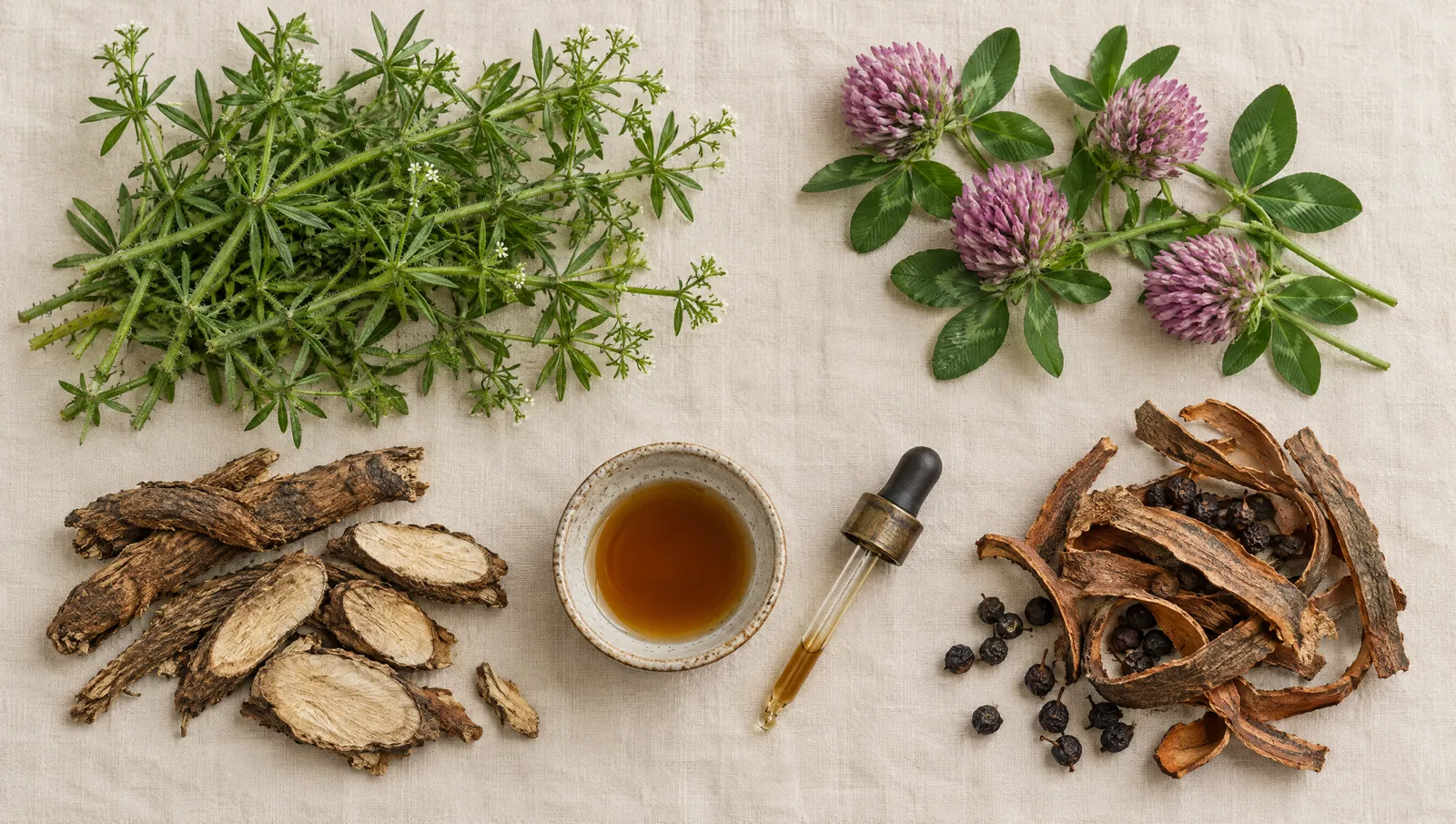
Food and fluids come first. Cleavera’s four herbs, cleavers, red clover, stillingia and prickly ash, are traditionally used to support healthy lymphatic flow,* and the flat-lay above shows them as they look before extraction. You can read about each plant in our ingredient guide or its story in the herbal tradition behind cleavers and red clover. The directions are 1 mL twice daily in your favorite drink, and the full label is on the Lymphatic Drainage Drops page.
Food is personal. If you have a kidney, heart or liver condition, take medicines such as diuretics, or have been told to limit fluids, salt or potassium, follow your clinician’s guidance over general advice, and check before using salt substitutes. See a doctor promptly about new swelling, especially in one arm or leg, or swelling with pain, redness or warmth. Cleavera is for adults. Talk to your healthcare professional before use if you’re pregnant or nursing, take medication (including blood thinners or hormone therapy), have a hormone-sensitive or bleeding condition, or have surgery scheduled. Read more in Lymphatic Drainage Drops: Side Effects & Who Should Skip Them.
Frequently asked questions
Is there a lymphatic diet?
There’s no recognized “lymphatic diet,” and no food list has been proven to move lymph. The eating pattern that supports overall health, built on vegetables, fruit, whole grains, protein and water with modest sodium, is the same one that supports healthy fluid balance. Be wary of plans that promise quick results or cut out whole food groups.
Should I use a salt substitute?
Check with your healthcare provider first. Many salt substitutes replace sodium with potassium, and the NIH warns that people with kidney problems or who take certain medications can end up with potassium levels that are too high. For most people, herbs, spices, garlic and citrus are a simpler way to cut back on salt.
Does fruit juice count as a serving of fruit?
Whole fruit is the better choice. The Dietary Guidelines for Americans encourage eating fruits and vegetables in their whole form and suggest keeping 100 percent juice to limited portions or diluting it with water. Juice still counts toward your fluids, but whole fruit brings its fiber along with it.
Is lemon water good for your lymphatic system?
Lemon water is water, so it counts toward your daily fluids, and the CDC suggests a wedge of lemon or lime as an easy way to make water more appealing. We’re not aware of evidence that lemon itself does anything special for lymph. If a slice of citrus helps you drink more, it’s a good habit.
Can I take lymphatic drops with meals?
Yes. Cleavera’s directions are 1 mL twice daily added to your favorite drink, and pairing your servings with breakfast and dinner makes them easy to remember. If an herbal supplement ever upsets your stomach, taking it with food may help. Stop use and talk to your clinician if nausea or digestive upset continues.
Sources
- U.S. Department of Agriculture and U.S. Department of Health and Human Services. “Dietary Guidelines for Americans, 2025–2030.” cdn.realfood.gov/DGA.pdf
- U.S. Food and Drug Administration. “Sodium in Your Diet.” fda.gov/food/…/sodium-your-diet
- NIH Office of Dietary Supplements. “Potassium: Fact Sheet for Consumers.” ods.od.nih.gov/factsheets/Potassium-Consumer
- MedlinePlus, U.S. National Library of Medicine. “Fluid and Electrolyte Balance.” medlineplus.gov/fluidandelectrolytebalance
- MedlinePlus, U.S. National Library of Medicine. “Albumin Blood Test.” medlineplus.gov/lab-tests/albumin-blood-test
- MedlinePlus, U.S. National Library of Medicine. “Fiber.” medlineplus.gov/ency/article/002470
- Harvard T.H. Chan School of Public Health, The Nutrition Source. “Water.” nutritionsource.hsph.harvard.edu/water
- Centers for Disease Control and Prevention. “About Water and Healthier Drinks.” cdc.gov/healthy-weight-growth/water-healthy-drinks